Aanahita Irani Ervin joined OK Policy Institute as a Fiscal Policy Analyst in May 2024. She calls Oklahoma City and Mumbai, India home having been raised in both cities. She earned her undergraduate degree in Chemical Engineering from the University of Oklahoma in 2022 and her Master of Public Policy from the Sanford School at Duke University in 2024. She began her policy journey wanting to merge science with policy to help address climate change. She soon realized her wide array of interests in criminal justice reform to food insecurity and how they are inextricably linked to poverty. Fiscal policy undergirds all policies because without financial backing, policies have no power. Aanahita is excited to use her skills to positively transform Oklahoma’s fiscal policy landscape to better serve everyday Oklahomans. When not working, she enjoys admiring Oklahoma’s sunsets, cooking meals, and taking rejuvenating naps.
State Question 847 would lower Oklahoma’s assessment caps for property taxes beginning in 2027. These caps limit how much a property’s assessed value can increase each year for tax purposes; property taxes are calculated on this assessed value. [More...]
The legislative session ended early this year with a budget that was released April 1, 2026. Leadership touted this highly unusual early release of the state’s general appropriations bill (Senate Bill 1177) as a feat of transparency. However, simply releasing… Read more [More...]
SQ 844 would allow the Legislature to change how it reimburses local schools and communities for certain manufacturing property tax exemptions.
• Download a copy of OK Policy’s SQ 844 Fact Sheet
• Watch our SQ 844 explainer video
State… Read more [More...]
Oklahomans are frustrated by rising housing costs, but this session, lawmakers are targeting the wrong culprit. While property taxes are drawing most of the attention at the Capitol this year, the real cost surge — homeowners’ insurance — remains largely… Read more [More...]
Public education is the foundation of a strong workforce and equal opportunity. It creates pathways for upward mobility and economic growth. In Oklahoma, however, that foundation is increasingly at risk. While lawmakers claim to prioritize public schools, current legislative efforts… Read more [More...]
Oklahomans are frustrated by rising housing costs, but this session, lawmakers are targeting the wrong culprit. While property taxes are drawing most of the attention at the Capitol this year, the real cost surge — homeowners’ insurance — remains largely… Read more [More...]
Property taxes are essential for Oklahoma’s local communities. Also referred to as ad valorem taxes, they pay for the basics we all count on—public schools, safe roads, and reliable police and fire protection. Unlike other taxes, property taxes go straight… Read more [More...]
From OK Policy’s Fiscal Policy Analyst Aanahita Irani Ervin:
At February’s Board of Equalization meeting, one urgent fact stood out: Oklahoma is shifting the cost of essential services onto low- and middle-income families. Year-over-year comparisons show the state is experiencing… Read more [More...]
Broadening Oklahoma’s tax base sounds like common sense. Put simply, broadening the tax base means increasing the number of people to whom a tax applies, an approach viewed favorably by lawmakers from both political parties. Broadening the tax base is… Read more [More...]
•Watch the Dec. 19, 2025 Board of Equalization meeting (YouTube)
•Proposed FY 2027 Revenue Certification
•Board of Equalization packets
•Learn more about Revenue Certification
The Oklahoma Board of Equalization estimated $8.35 billion of funds available for the Governor’s budget proposal… Read more [More...]





 OKPOLICY.ORG

 State Question 847 would lower Oklahoma’s assessment caps for property taxes beginning in 2027. These caps limit how much a property’s assessed value can increase each year for tax purposes; property taxes are calculated on this assessed value. [More...]
 The legislative session ended early this year with a budget that was released April 1, 2026. Leadership touted this highly unusual early release of the state’s general appropriations bill (Senate Bill 1177) as a feat of transparency. However, simply releasing… Read more [More...]
 SQ 844 would allow the Legislature to change how it reimburses local schools and communities for certain manufacturing property tax exemptions.
• Download a copy of OK Policy’s SQ 844 Fact Sheet
• Watch our SQ 844 explainer video
State… Read more [More...]
SQ 844 would allow the Legislature to change how it reimburses local schools and communities for certain manufacturing property tax exemptions.
• Download a copy of OK Policy’s SQ 844 Fact Sheet
• Watch our SQ 844 explainer video
State… Read more [More...]
 Public education is the foundation of a strong workforce and equal opportunity. It creates pathways for upward mobility and economic growth. In Oklahoma, however, that foundation is increasingly at risk. While lawmakers claim to prioritize public schools, current legislative efforts… Read more [More...]
 Oklahomans are frustrated by rising housing costs, but this session, lawmakers are targeting the wrong culprit. While property taxes are drawing most of the attention at the Capitol this year, the real cost surge — homeowners’ insurance — remains largely… Read more [More...]
 Property taxes are essential for Oklahoma’s local communities. Also referred to as ad valorem taxes, they pay for the basics we all count on—public schools, safe roads, and reliable police and fire protection. Unlike other taxes, property taxes go straight… Read more [More...]
 From OK Policy’s Fiscal Policy Analyst Aanahita Irani Ervin:
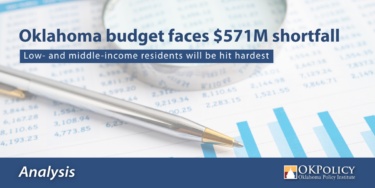
At February’s Board of Equalization meeting, one urgent fact stood out: Oklahoma is shifting the cost of essential services onto low- and middle-income families. Year-over-year comparisons show the state is experiencing… Read more [More...]
From OK Policy’s Fiscal Policy Analyst Aanahita Irani Ervin:
At February’s Board of Equalization meeting, one urgent fact stood out: Oklahoma is shifting the cost of essential services onto low- and middle-income families. Year-over-year comparisons show the state is experiencing… Read more [More...]
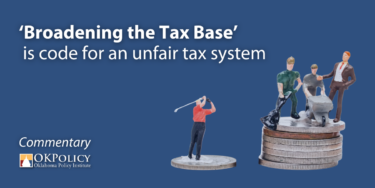 Broadening Oklahoma’s tax base sounds like common sense. Put simply, broadening the tax base means increasing the number of people to whom a tax applies, an approach viewed favorably by lawmakers from both political parties. Broadening the tax base is… Read more [More...]
 •Watch the Dec. 19, 2025 Board of Equalization meeting (YouTube)
•Proposed FY 2027 Revenue Certification
•Board of Equalization packets
•Learn more about Revenue Certification
The Oklahoma Board of Equalization estimated $8.35 billion of funds available for the Governor’s budget proposal… Read more [More...]
•Watch the Dec. 19, 2025 Board of Equalization meeting (YouTube)
•Proposed FY 2027 Revenue Certification
•Board of Equalization packets
•Learn more about Revenue Certification
The Oklahoma Board of Equalization estimated $8.35 billion of funds available for the Governor’s budget proposal… Read more [More...]