



 OKPOLICY.ORG

As 2025 comes to a close, we’re highlighting OK Policy’s most impactful publications of the year. From in-depth research and data-driven analysis to timely commentary grounded in community experience, these 10 pieces show how evidence-based policy can strengthen Oklahoma’s economy, communities, and quality of life. Explore the work that helped inform debates, challenge assumptions, and push our state toward a more equitable and prosperous future.
Facts and figures on federal grant dollars in Oklahoma (2024)
In January, the Trump administration announced a temporary pause on federal grants, loans, and other financial assistance—raising immediate concerns about disruptions to essential programs nationwide, including in Oklahoma. Because Oklahoma relies heavily on federal dollars to support programs serving millions of residents, even short-term funding uncertainty could have serious consequences for communities across the state. [Read more]
Oklahoma Death Penalty Tracker
 Oklahoma has carried out more than 125 executions since capital punishment resumed in 1976—giving the state the highest execution rate per capita in the nation. As scrutiny of the death penalty has increased, OK Policy launched the Oklahoma Death Penalty Tracker, an online tool that brings transparency to the system. The tracker compiles detailed information on all active death row cases since 2021. [Read more]
SB 1027 would exclude millions of registered voters from signing initiative petitions

Oklahoma’s initiative petition process is a secure and effective way for citizens to hold state government accountable. Senate Bill 1027, signed into law in 2025, undermines that process by placing arbitrary limits on how many signatures can be collected from each county. This effectively excludes more than two million registered voters from participating in the initiative petition process. [Read more]
2024 Census data: Oklahoma ranks as 8th poorest state
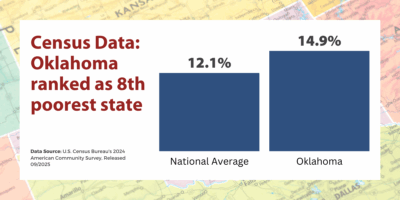 Oklahoma’s poverty rate fell slightly in 2024, but more than 1 in 7 residents still live in poverty—ranking the state as having the eighth highest nationwide. Persistent poverty and rising income inequality continue to strain families. Looking ahead, proposed federal cuts under the “One Big Beautiful Bill” threaten programs that help Oklahomans meet basic needs and support children. [Read more]
Oklahoma ranks 46th in 2025 KIDS COUNT Data Book, highlighting lawmakers’ misplaced priorities
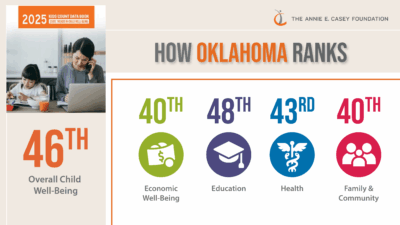 Oklahoma ranks among the bottom five states for child well-being in the 2025 KIDS COUNT® Data Book. The state placed in the top half nationally on just two of 16 indicators, underscoring the need for stronger investments. The data make clear that Oklahoma leaders must expand proven programs and services to help children and families thrive statewide. [Read more]
What you need to know about the minimum wage in Oklahoma
 Low wages affect more than workers—they impact children, families, and entire communities. Too many Oklahomans earn too little to afford housing or food, despite working full time. Raising the minimum wage is a proven policy solution that can strengthen Oklahoma’s economy, improve quality of life, and reduce poverty statewide. [Read more]
Oklahoma shouldn’t allow private prisons to reopen as immigration detention centers. Here are 6 reasons why.
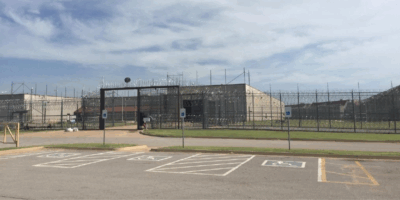 Federal immigration policies are expanding detention nationwide, with Oklahoma poised to see growth in private ICE facilities. Three detention centers already operate in the state, and two more could reopen. As private prison companies seek to profit from expanded detention, Oklahoma faces growing concerns about the costs, accountability, and community impacts of privately run facilities. [Read more]
You shouldn’t have to touch a hot stove twice: Triggered tax cuts are bad for Oklahoma

Triggered tax cuts are a favored strategy to pursue income tax elimination, but Oklahoma’s “path to zero” carries serious risks. Automatic cuts can activate during downturns, undermining budgets and accountability. Past trigger failures forced lawmakers to reverse course, raising concerns about whether future tax cuts will jeopardize funding for essential needs. You shouldn’t have to touch a hot stove twice. [Read more]
New data shows Oklahoma’s housing crisis is worsening
 Oklahoma’s housing crisis is worsening, with a shortage of nearly 85,000 affordable rental homes for extremely low-income residents. Most affected families spend over half their income on rent, leaving them vulnerable to eviction. Policymakers must invest in affordable housing, reform zoning, and strengthen rental assistance to help Oklahomans stay housed. [Read more]
Tribal-State Policy 101: What is Tribal sovereignty?
 Tribal sovereignty refers to the inherent authority of federally recognized Tribal Nations to govern themselves and determine their own interests. While historical policies sought to undermine this authority, modern federal laws increasingly support Tribal sovereignty and self-determination. Understanding this framework is essential to improving how Oklahoma and Tribal Nations work together today. [Read more]