



 OKPOLICY.ORG
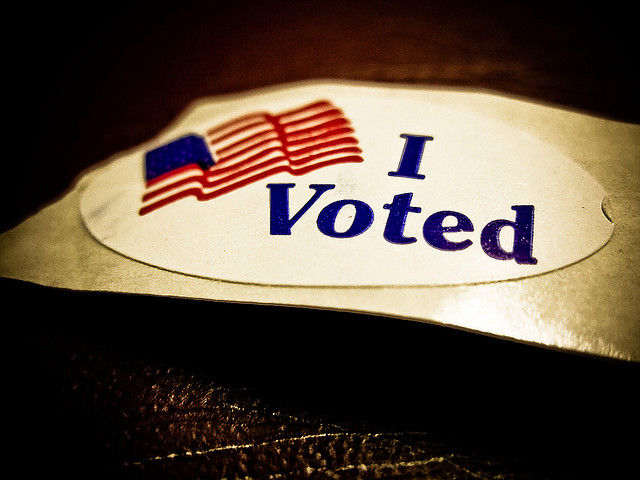
It may have been hard for Oklahomans and other Americans not to develop an acute case of election envy during the recent Scottish referendum on independence. Eighty-five percent of eligible Scottish voters cast a ballot; in some districts, turnout topped 90 percent. Meanwhile, in Oklahoma, less than half of registered voters went to the polls in 2012, and in this year’s November elections, fewer than 40 percent are likely to show up to decide who will represent us in statewide offices, Congress, and the state legislature. Oklahoma’s voter turnout is now among the very lowest in the nation.
As we discussed in this recent blog post, low voter turnout is one major indicator of the breakdown of democracy in Oklahoma, along with declining voter registration, the growing number of uncontested elections, and a demographically unrepresentative legislature. Here we look at factors that may be hindering Oklahomans from participating fully in the electoral process.
Limited Ballot Access
Oklahoma has among the nation’s most restrictive ballot access laws, which gives voters fewer choices and discourages participation among those who aren’t supporters of the two major national parties.
[pullquote]In 2012, Oklahoma was the only state where voters could choose from only two candidates for President.”[/pullquote] To get on the ballot in Oklahoma, a political party needs to: a) have earned at least 10 percent of the vote for the office at the top of the ticket in the last general election (i.e., president or governor), or b) submit a petition signed by a number of voters equal to 5 percent of the last vote cast for the office at the top of the ticket (more than 66,000 valid signatures in 2014). Oklahoma is the only state in the nation in which an independent presidential candidate, or the presidential candidate of a new or previously unqualified party, needs support from more than 2 percent of the last vote cast to get on the ballot. In 2012, Oklahoma was the only state where voters could choose from only two candidates for President and the only state in which Libertarian Party candidate Gary Johnson was kept off the ballot.
Closed Primary System
In Oklahoma, all primary elections are restricted to registered party voters, which means that registered Independents, who now make up 12.5 percent of all Oklahoma voters, have no voice in selecting which candidates will appear on the general election ballot. Twenty states have adopted open primaries for selecting Presidential candidates, which allows voters to vote in the party primary of their choosing. Several states, including Louisiana, California and Washington, have done away with party primaries and allow all voters to select from a single list of candidates.
One interesting aspect to Oklahoma’s closed primary system is that political parties can choose to allow Independents to vote in their party primaries. As Kurt Hochenaur pointed out on the Okie Funk blog, between November 1 and 30 of every odd-numbered year, Oklahoma’s state party chairs can notify the election board that Independents will be allowed to vote in their party primaries for the next two years. If one party opts to allow Independents to vote, then the other party is given an extended deadline to decide whether to also allow Independents in their primaries.
Obstacles to Voting
A growing number of states have adopted measures that facilitate voter registration and voting. As of 2012, 13 states allow voters to complete a voter registration application entirely online, without requiring that a form be printed out, mailed, or scanned. This is up from just two states that allowed online registration in 2008. Ten states plus the District of Columbia have now adopted same day voter registration, allowing any qualified resident of the state to go to the polls on Election Day, register that day by showing identification and proof of residency, and then vote.
Oklahoma has taken some steps to facilitate voting for those unable to make it to the poll on election day. The state allows voters to request absentee ballots without requiring a reason, and offers early voting the Thursday, Friday and Saturday before an election. However, more than half of states allow early voting at least a week before an election, with many allowing votes to be cast 30-45 days in advance or as soon as ballots are printed. The average early voting period among states that allow it is 33 days, according to the National Conference of State Legislatures. Meanwhile, Oregon, Washington, and, as of 2014, Colorado, have adopted all-by-mail elections, doing away entirely with the need to go to the polls.
In 2010, Oklahoma approved State Question 746, which added a voter identification requirement for in-person voting. Oklahoma’s voter identification law is less stringent than some states in that it allows for a voter registration card in lieu of picture ID and allows voters to cast provisional ballots based on a sworn statement. However, some voters who may be legally eligible to cast a vote may be dissuaded from going to the polls if they don’t possess or are not carrying a photo ID.
Finally, Oklahoma bars felons from voting for the full length of their sentence, even if they’ve been released on probation or parole. As of 2010, about 1.8 percent of Oklahomans (51,491 people), and 6.6 percent of African Americans (13,526 people) were unable to vote due to felon disenfranchisement. At least nine states allow some people with felony convictions to vote even prior to completing their sentence.
Limited Voter Information
What Should be Done?
All told, a wide array of laws, practices, and customs are contributing to the decline of electoral participation and competition in Oklahoma. What might it take to get more Oklahomans to re-engage in electoral politics? We would love to hear from you on this subject. Please share your ideas by submitting a comment on this page or sending an email to info@okpolicy.org with the subject “Broken democracy.” We will compile the most thoughtful, promising, and provocative ideas and share what we’ve heard, with the hope that some of the best suggestions will inform reform efforts in the coming legislative sessions.