OKPOLICY.ORG


[Update: During public comments on the ordinance, a large majority of those speaking said that passing it would be a mistake. A final vote is still scheduled for Oct. 13.]
Today the Oklahoma City Council is holding a public hearing on an amendment to the city’s panhandling ordinance that would make it illegal to stand or walk in the median for the purpose of panhandling or collecting charitable contributions. A final hearing on the amendment is set for Tuesday, October 13th. Councilwoman Meg Salyer, who introduced the amendment, told The Oklahoman that she receives complaints “in the multiples every day” about panhandlers. The amendment would make panhandling from the median a misdemeanor punishable by a fine of up to $500.
The amendment received pushback from other councilors when it was introduced last Tuesday. Councilman Ed Shadid said panhandling is evidence that the city has failed to invest in services to help those who find themselves out on the street. Councilman Pete White said in the meeting, “The other thing I’m concerned about is the number of social service agencies I heard from, not one of them said this is a good idea… All across the map they all said this is not a good idea.”
One reason that groups who work closely with the poorest citizens may be concerned is that criminalization of poverty is one of the root causes of people being trapped in poverty. From a 2014 report by the National Law Center on Homelessness & Poverty:
“Criminalization measures waste limited state and local resources. Rather than addressing the causes of homelessness and helping people escape life on the streets, criminalization ‘creates a costly revolving door that circulates individuals experiencing homelessness from the street to the criminal justice system and back. … Arrests, incarceration, fines, and convictions prolong homelessness by creating new, sometimes nearly insurmountable barriers to obtaining employment and stable housing.”
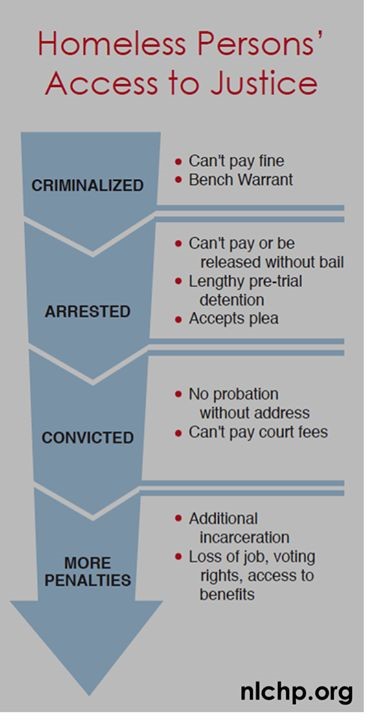 It should be a serious concern that criminalizing panhandling in Oklahoma City will only serve to burden more people with fines they have no ability to pay. Though these initial fines may not put someone in jail, the fine can initiate a cycle that is devastating to individuals without the means to pay. As the Tulsa World recently pointed out, nearly a third of those booked into the Tulsa Jail last year were arrested on court debt-related complaints. With the Oklahoma City jail already facing a potential federal takeover due to “unsanitary conditions, negligent care of inmates, poor medical care, and outright abuse,” the city can hardly afford to send more people into a system that may be on the verge of breaking down.
We have more effective solutions that don’t threaten to trap people in the criminal justice system. One solution highlighted in a report by the United States Interagency Council on Homelessness in 2012 serves as an example that could prove to be effective in Oklahoma City:
“The Palo Alto Downtown Streets Team was created in response to a Business Improvement District survey that identified homelessness and cleanliness as the two biggest issues facing local business owners. It was developed as a way to reduce panhandling, clean and beautify the downtown area, and give people who are homeless the opportunity to work. City officials, law enforcement, local businesses and volunteers join together to provide job opportunities and one-on-one assistance to people experiencing homelessness. Participants clean and sweep streets and business walkways in exchange for vouchers for food, shelter and other services to help them secure permanent employment and housing. Since the program began in 2005, more than 164 men and women have graduated into self-sufficiency.”
Nonprofits like Downtown Streets Team provide alternatives to criminalization. Investing in these types of solutions may require the city to increase its social services budget, but the return on the investment will be policies that restore dignity to a population that taxpayers would otherwise be subsidizing in jail.
For too long, criminalization has been our first response to social nuisances. It’s time to focus on fixing problems instead of trying to lock them away where they can’t be seen.