



 OKPOLICY.ORG
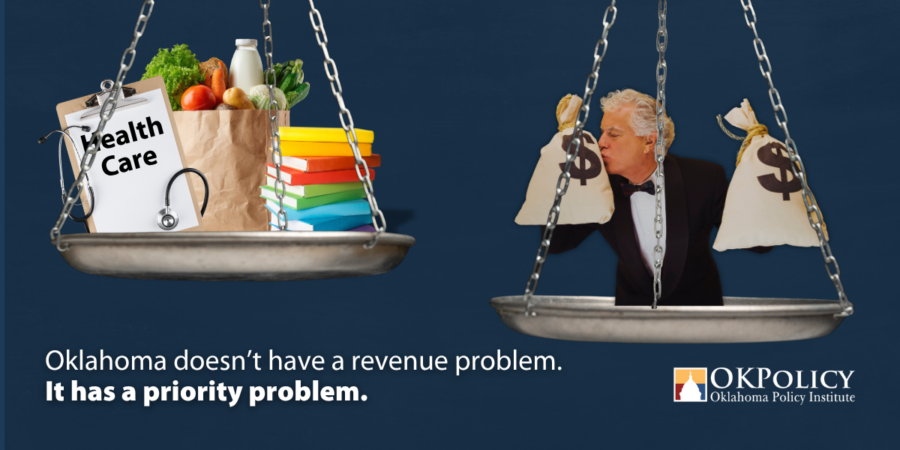
For years, the dominant narrative at the Capitol has been that we simply can’t afford to fully fund the things that make communities work — public schools, infrastructure, basic health coverage. We’re told the budget is tight. That tradeoffs are unavoidable. That there just isn’t enough to go around.
But that framing falls apart the moment you look at what the state consistently finds money for because Oklahoma subsidizes things all the time.
We subsidize big companies with tax breaks and special deals in the name of “growth.” We subsidize low wages by allowing employers to pay so little that workers rely on public programs just to get by. We subsidize instability and bear the downstream costs of underinvestment in housing, healthcare, and education long after the damage has occurred.
Then we turn around and say we can’t afford public services.
That contradiction comes from policy choices that treat some investments as essential and others as optional — even when the evidence shows it’s the other way around.
Take health care. Oklahoma voters made a clear decision when they approved SoonerCare (Medicaid) expansion, embedding coverage into the state constitution. And yet, debates continue about cost, sustainability, and whether the state can “handle” it long term. Meanwhile, the cost of not covering people — delayed care, avoidable hospitalizations, lost productivity — is rarely treated with the same urgency.
Or consider education. Lawmakers routinely acknowledge teacher shortages, overcrowded classrooms, and the long-term consequences of underfunded schools. But when it comes time to write the budget, proposals that would cut local revenue — including significant cuts to public schools — move forward with far less scrutiny than the investments we know students need.
In conversations about tax relief, the same pattern holds. Broad, across-the-board tax cuts are touted as tangible relief for everyone, despite overwhelming evidence that they disproportionately benefit those at the top while draining resources from the very services most Oklahomans rely on. Targeted relief, on the other hand, is often treated as secondary or dismissed entirely.
All of these points highlight a deeper truth: scarcity in Oklahoma is, at least in part, manufactured.
Not because resources are unlimited, but because we’ve chosen — repeatedly — to direct them in ways that don’t align with our stated values. We say we care about strong schools, healthy families, and stable communities. But our budgets tell a different story.
Every dollar in the budget reflects a choice. And right now, too many of those choices are working against the very outcomes we claim to want.