OKPOLICY.ORG

Carly Putnam, Policy Director for OK Policy, contributed to this analysis.
– – –
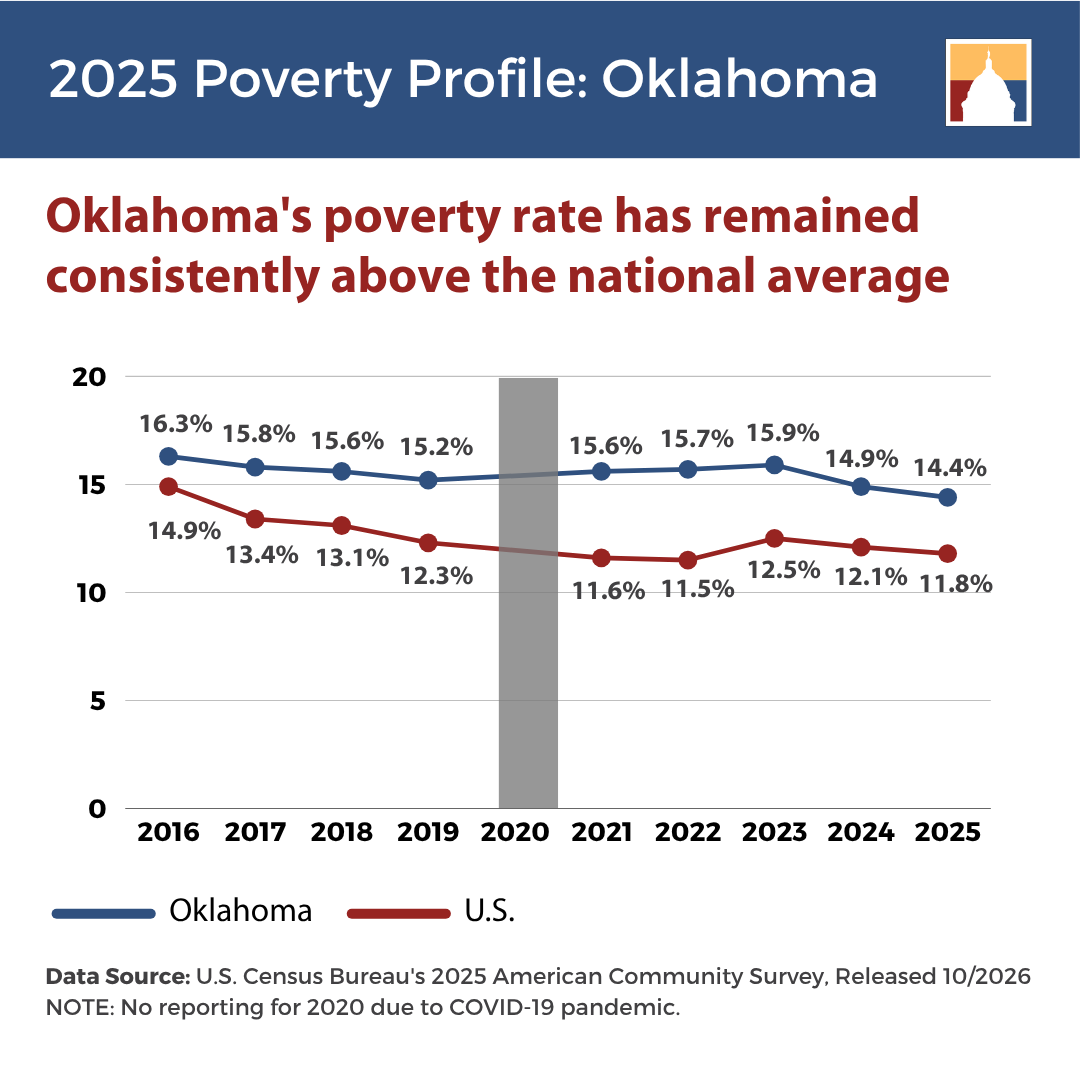
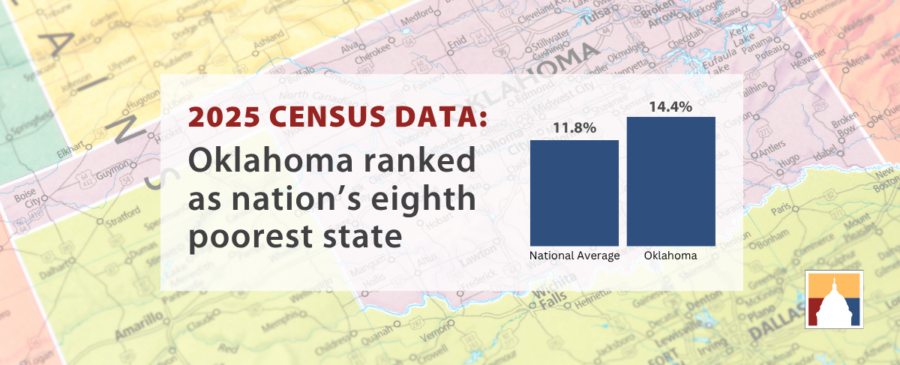
Data from the Census Bureau’s 2025 American Community Survey released Oct. 29 show that Oklahoma’s poverty rate was 14.4 percent, which means that nearly 1 in 7 state residents live in poverty. Oklahoma’s overall poverty rate in 2025 improved by half a percentage point compared to the previous year. For the second consecutive year, Oklahoma had the eighth highest poverty rate in the country.
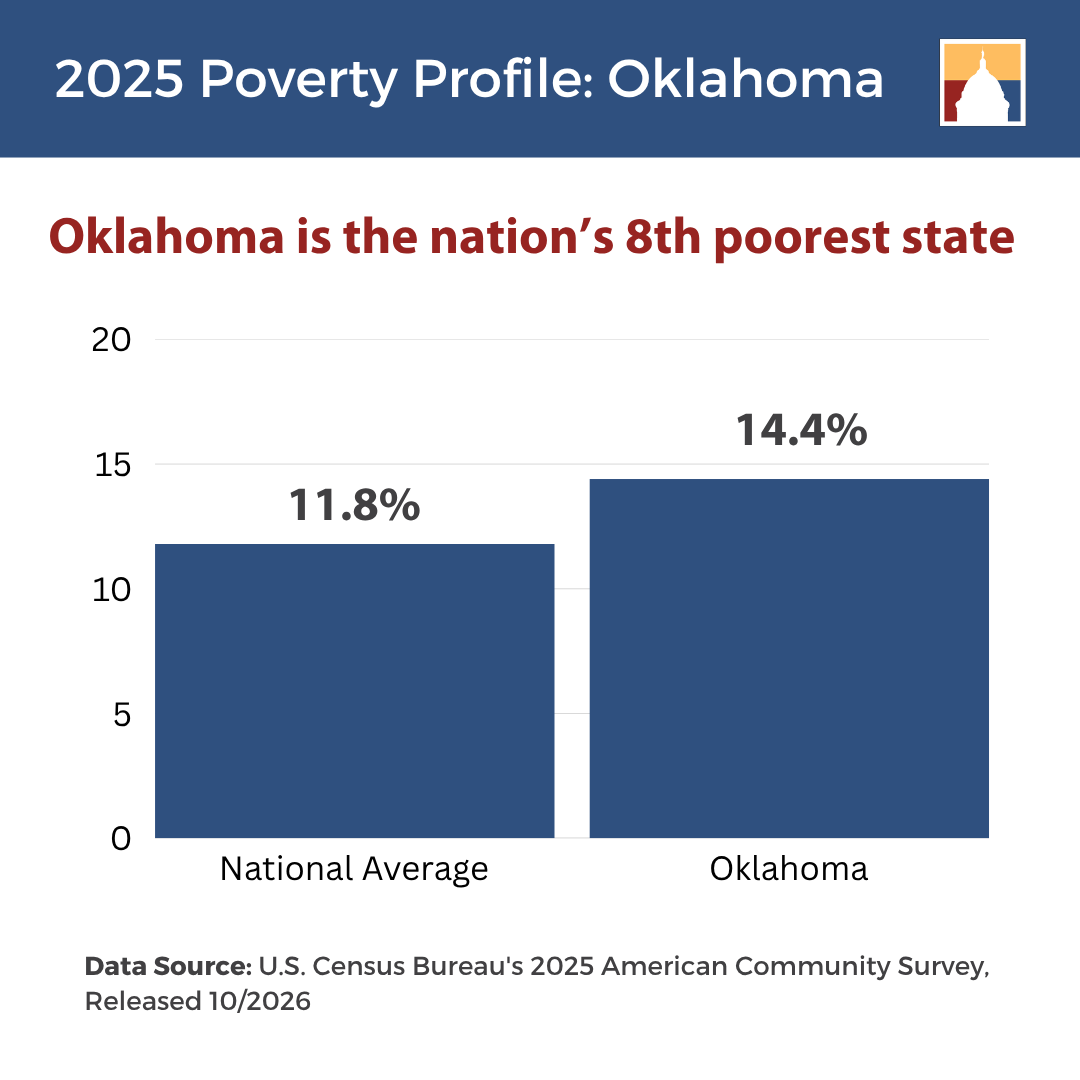 The national poverty rate in 2025 was 11.8 percent. The states with higher rates of poverty than Oklahoma in 2025 were: Louisiana (18.1 percent), Mississippi (18 percent), West Virginia (16 percent), Kentucky (15.9 percent), New Mexico (15.5 percent), Arkansas (15 percent), and Alabama (14.7 percent).
While Oklahoma and the U.S. as a whole saw small decreases in its poverty rate during 2025, persistent poverty and growing income inequality remain widespread and a significant factor for quality of life for Oklahomans. Looking ahead, it’s also important to consider how H.R. 1 (the “One Big Beautiful Bill”) is projected to make lives worse by drastically cutting the programs and services that help many Oklahomans, families, and children. The full effects of H.R. 1 are expected to hit Oklahomans in 2027.
Oklahoma children continue to live in poverty at higher rates
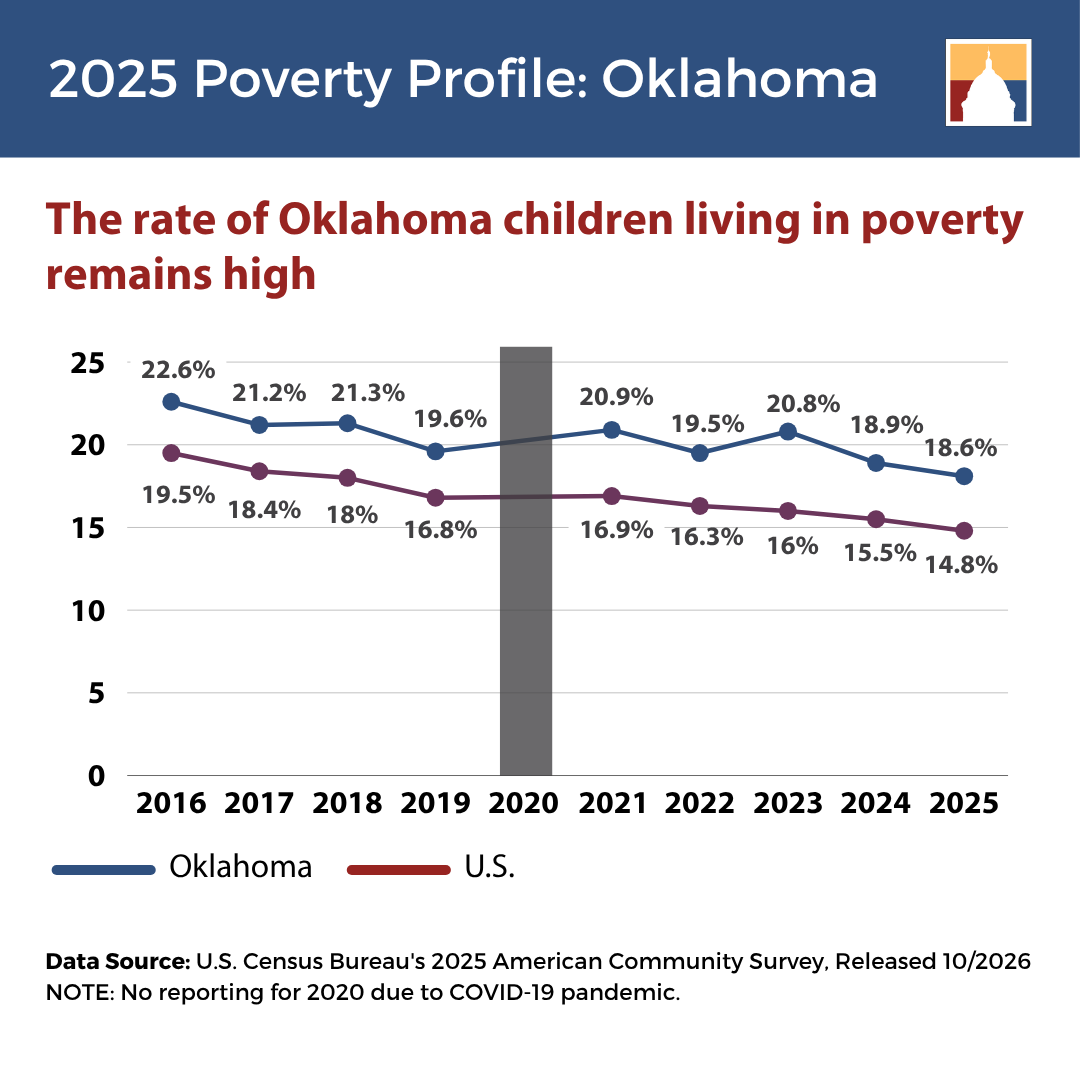
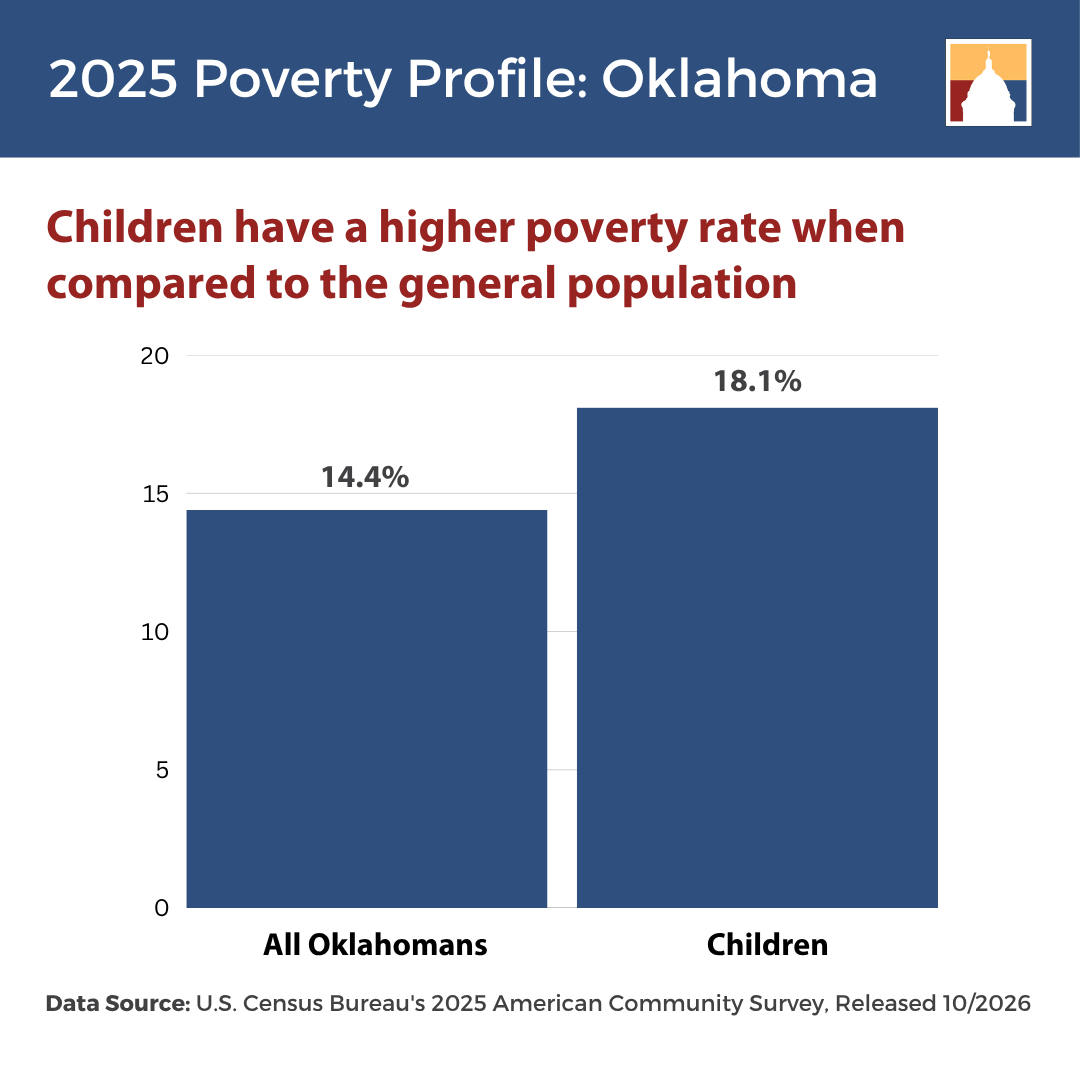
The latest Census data show that poverty is concentrated in children, with 18.1 percent, or nearly 1 in 5 Oklahoma children living at or below the federal poverty level. For a family of three, this means the child lived in a household that earned $26,650 or less in 2025.
While the state’s child poverty rate decreased slightly from 2014’s 18.6 percent, Oklahoma had the eighth highest child poverty rate among the nation’s 50 states, worsening from ninth in 2024. Oklahoma children experience poverty at rates well above the national average of 14.8 percent.
Not all Oklahomans are struggling equally
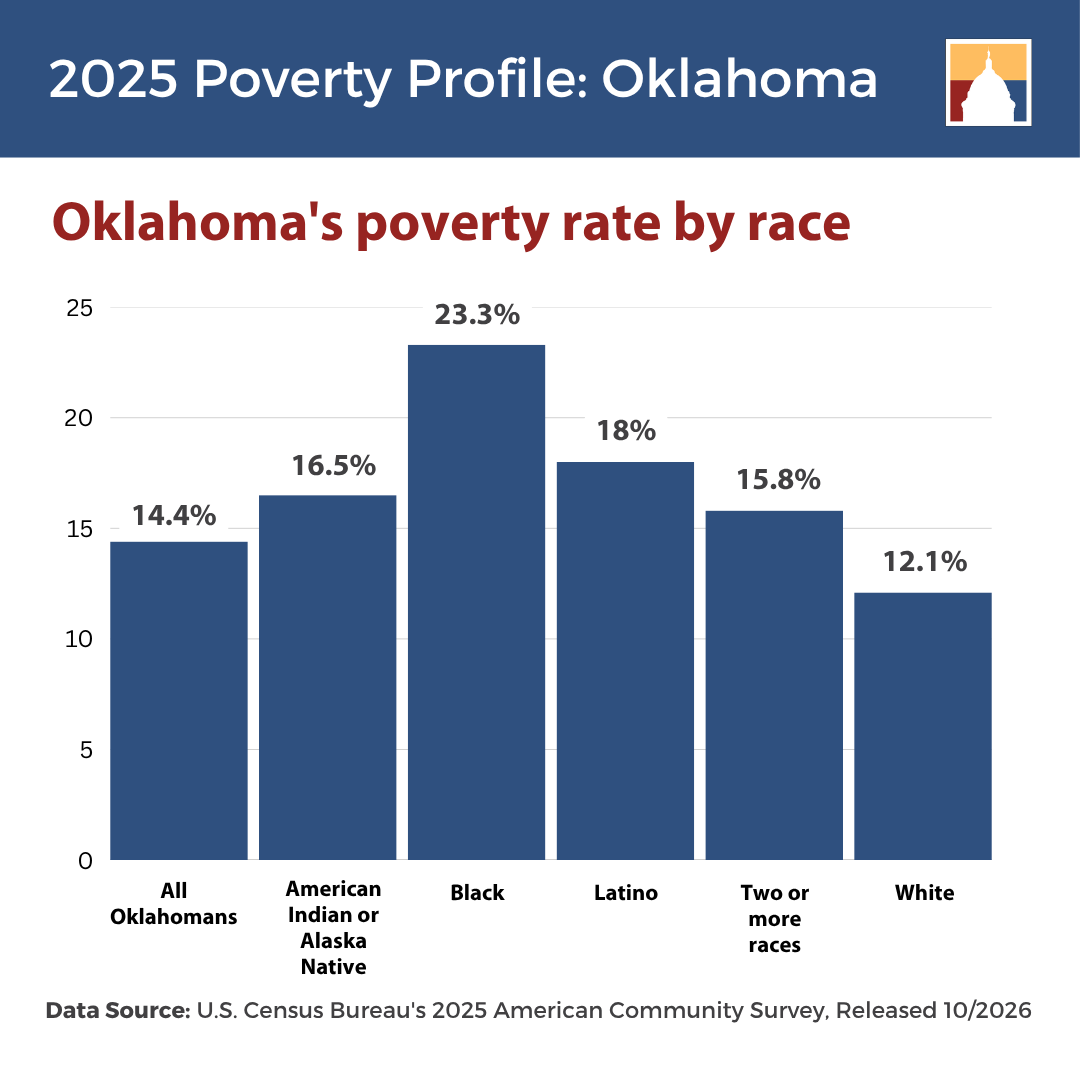 While poverty hits residents across the state, not all Oklahomans bear the brunt of poverty equally. Poverty rates declined in nearly all racial groups in Oklahoma except for Black Oklahomans, where the poverty rate rose slightly. Even with modest gains, most racial groups continue to experience poverty at disproportionately higher rates than white families.
Black Oklahomans experienced a poverty rate of more than 1 in 5 (23.3 percent, up from 22.8 percent), and Latino Oklahomans reported a poverty rate of 18 percent, a decrease from 18.3 percent in 2024. The poverty rate for American Indians/Alaska Natives in Oklahoma decreased to 16.5 percent when compared to 19 percent in 2024. Nearly 1 in 6 (15.8 percent) of Oklahomans of two or more races lived in poverty.
In comparison, the rate of white Oklahomans living in poverty was 12.1 percent, down from 12.6 percent in 2024. Poverty is concentrated in Oklahoma’s communities of color, which each make up between 6 and 17 percent of the state’s population.
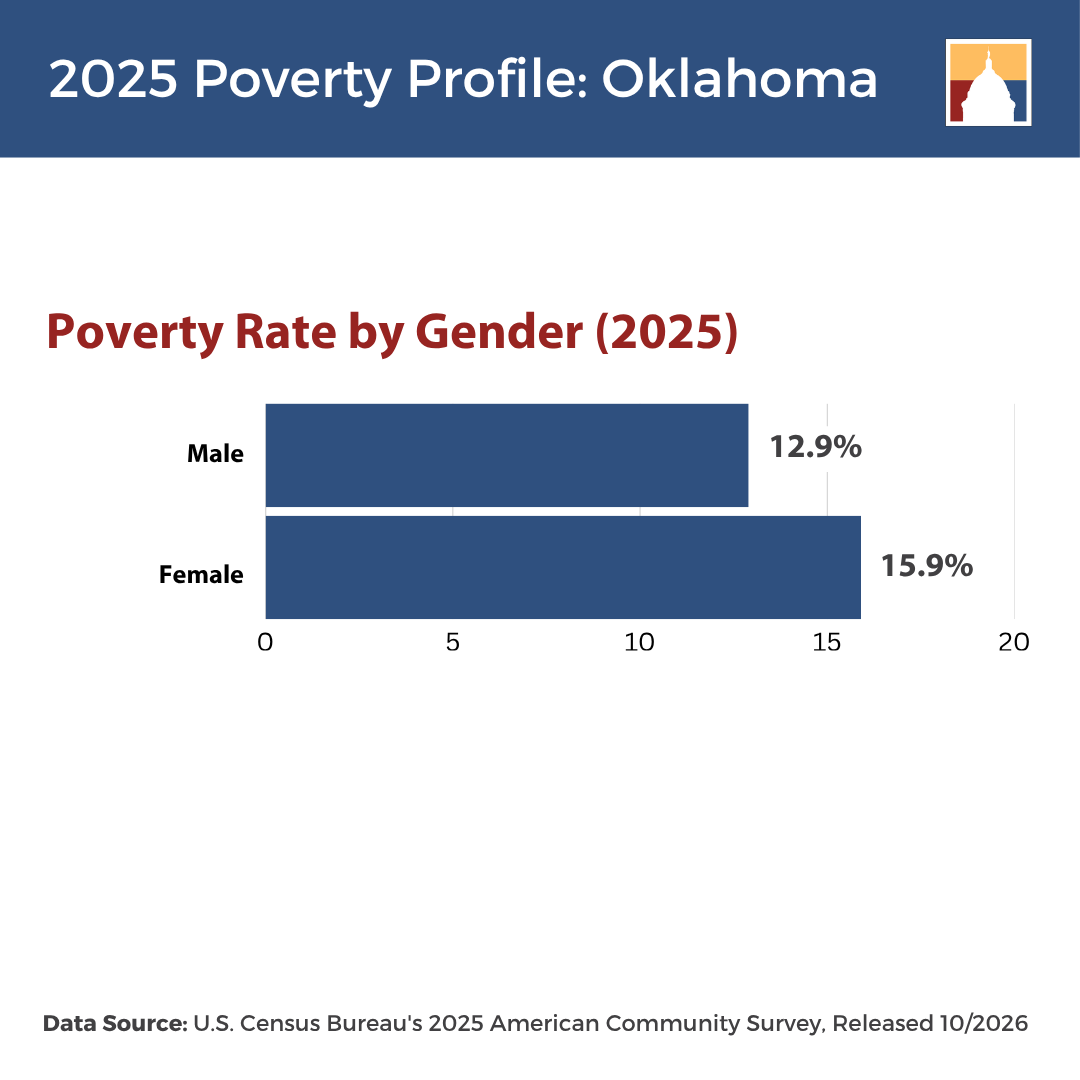
Poverty is not only racialized but also gendered. Census data show that Oklahoma women are substantially more likely to live in poverty than men. The poverty rate for women remained unchanged at 15.9 percent in 2025, while the poverty rate for men dropped a full percentage point to 12.9 percent.
Oklahomans had among the nation’s highest uninsured rate
The rate of Oklahomans without health insurance was 12.6 percent in 2025. Oklahoma in 2025 had the nation’s third highest uninsured rate, one and a half times higher than the national average of 8.4 percent.
Of note when looking at data for health insurance, the Census Bureau in 2025 updated how it collects and processes health insurance data, making it hard to compare with past years. While the data may suggest an increase in Oklahoma’s uninsured rate, some of that change could reflect the new methodology. At the same time, more Oklahomans may have lost coverage due to the unwinding of Medicaid protections during the COVID-19 pandemic.
What can be done to reduce poverty in Oklahoma
Widespread poverty in Oklahoma is a policy choice. State lawmakers have a number of policy solutions available to reverse the state’s poverty trajectory. Lawmakers have proven tools to reduce poverty in Oklahoma. They can deliver targeted tax credits to low- and moderate-income families; increase access to affordable housing, including expanding tenant protections; invest meaningfully in public education, child care, and other community needs; and modify the tax code to ensure everyone pays their fair share, including stopping efforts to cut income and property taxes that pay for essential shared public services.
Oklahoma’s 2025 poverty statistics are nothing new. Poverty remains higher in Oklahoma than in most other states. Poverty in Oklahoma remains concentrated in children, in women, and in communities of color.
State policy choices in recent years have not meaningfully moved the needle for the Oklahomans who need it most. Lawmakers have instead prioritized efforts to dramatically limit local revenues, sent hundreds of thousands of dollars to wealthy families whose children attend private school, significantly limited constituents’ ability to pass ballot measures, and attempted to roll back life-saving Medicaid coverage for more than 200,000 people.
The way forward to a better Oklahoma is clear. What our lawmakers will choose to do remains to be seen.
– – –
Additional snapshots from the 2025 Census data