




 OKPOLICY.ORG
Though the dust hasn’t yet settled at the Capitol, Oklahoma’s Legislature has nearly finished a budget for FY’10, which starts July 1. The final budget totals $7.231 billion. Legislators used $641 million from the federal stimulus bill to make up for a state revenue decline of more than $600 million. The resulting spending total is 1.5 percent higher than last year’s, counting the stimulus. Without the stimulus, state spending is down 7.1 percent.
OK Policy will shortly be releasing a full-fledged issue brief that will look in detail at the numbers and what they could mean in FY’10 and beyond. Meanwhile, we have put together a four-page fact sheet that shows how this year’s budget fits into historical perspective, where the money comes from, and how it is allocated among state agencies.(With the Senate’s abrupt adjournment on Friday, some appropriation bills await final passage. The numbers in the fact sheet are based on appropriation bills that have passed both chambers or been voted out of conference committee.)
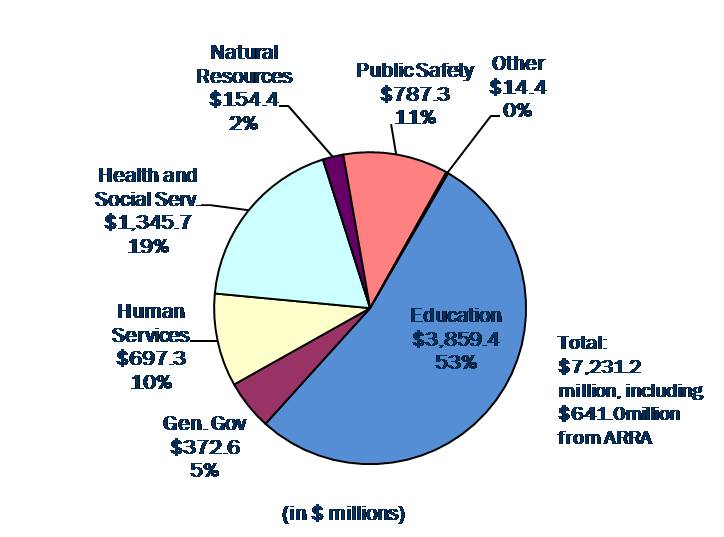
The graph below shows that Education gets more than half–53 percent–of the total, followed by Health and Social Services. Both of these functions benefited from injections of stimulus funds. These are the only two functions with more money than last year. Other service areas took cuts ranging from one to four percent. Many agencies were cut seven percent from FY’09.
Budgets don’t mean much in themselves. Their importance is in the level of service they establish and in how services are allocated. Thanks to Oklahoma’s rushed and largely hidden approach to budgeting, we can’t say a lot about what this budget means in Oklahoma’s cities, towns, and farms. We’ll all learn more about that as agencies develop detailed budget work plans and as the fiscal year unfolds.
Budgets also don’t mean much out of context. We also need to understand how this year’s budget is different from the last few years,’ More important, we need to look ahead to see how economic and political conditions, as well as choices we made in this year’s budget, will affect our taxes and spending in the next few years.