OKPOLICY.ORG

 Camille Landry is a writer, activist, and advocate for social justice who lives in Oklahoma City. This is the fifth in Camille’s series, “Neglected Oklahoma”, focused on Oklahomans who find themselves in a position where the basic necessities of life are hard to come by. For previous installments, click here, here and here. The people whose stories we tell are real people and their stories are true. Names have been changed to protect privacy.
David T. Johnson is incarcerated by the Oklahoma Department of Corrections – one of over 25,000 people in the state to have that distinction. David grew up in small-town Oklahoma. He started drinking and smoking pot at the age of 17, then moved on to heavier drugs like meth, cocaine and pills. After a few juvenile run-ins with the law he decided to clean up his life and quit using drugs.
He enrolled in college to study mechanical engineering and managed to earn good grades while holding down a full time job. Things were looking up, but the chance of a relapse is an ever present reality for addicts. Stress from family problems eventually triggered a relapse of David’s addiction. Despite the setback in his recovery, he stayed on track to graduate with an associate’s degree in Mechanical Engineering. Until the day he got into an argument with his girlfriend in a convenience store parking lot.
The argument turned physical. After his girlfriend slapped and punched him in the face, David held her down and was on the verge of hitting her back. He chose instead to stop and walk away. Onlookers called the police and David was charged with assault and with possession of a controlled substance – for about $16 worth of methamphetamine.
He was also charged with interfering with a 9-1-1 call and with child abuse – because he shouted at the person who was calling the police and because that person was apparently a minor. “I felt that the DA was just piling on charges so as to get the maximum sentence and appear ‘tough on crime,’” Johnson says. No testimony was offered at his pretrial hearing as to the child abuse case and the charges of interfering with a 9-1-1 call were dropped. But the DA used the charges as leverage to threaten, “You have two hours to either enter a plea of guilty or we will take this to a jury trial and I’ll see that you get a life sentence.”
Even after his girlfriend told both police and the judge that she was the only one who did any hitting, the DA refused to drop the assault charges. At the suggestion of his public defender, he entered a plea of guilty. Then David was hit with another statutory trump card: additional sentencing penalties because he was arrested within 1000 feet of a “park.” The convenience store parking lot backed onto a vacant lot where the city had just broken ground to put in a playground. Since it was zoned to be a playground even though no playground existed, the statute applied.
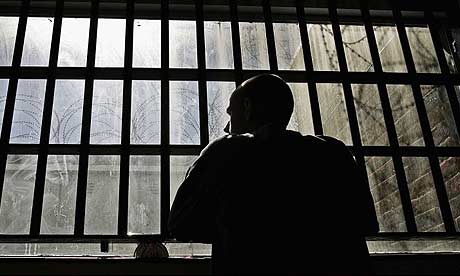 David Johnson was sentenced to 15 years in prison and must serve 85% of his 15-year sentence before he is eligible for parole or points for early discharge – essentially time off for good behavior. This amounts to a minimum of 12 years, 8 months in prison. It will likely be longer than that. Only about 11 percent of inmates up for parole get approved for release, a contributing factor to near capacity prisons that costs Oklahoma taxpayers an average of $80 million per year.
“I know I was wrong,” Johnson says. “I messed up and I deserve to be punished. But can you tell me, is this a reasonable sentence for somebody who got high, went to a convenience store parking lot and had a shouting match with his girlfriend? Am I such a danger to the people of Oklahoma that I should be locked up until I’m middle aged?”
Half of Oklahoma’s prisoners are being held for nonviolent offenses, and nearly 30 percent for nonviolent drug offenses. “I’ve been in since 2007,” Johnson said. “I’ve seen hundreds of men who are locked up for a decade or more for possession of small amounts of drugs. Not for selling, not for fighting about drugs, not for stealing to support a drug habit, but for having half a joint or a couple grams of meth in their pocket. Our lives are pretty much over.”
When David is eventually released his prospects for employment will be slim. Oklahoma law puts up barriers for ex-felons pursuing employment even in professions that have no connection to their crimes and private employers routinely exclude applicants with a criminal history. The employment situation is exacerbated by the lack of training available in our state’s prisons, and by strictures against financial aid for people with felony convictions. It’s perhaps unsurprising then that nearly a quarter of people released from Oklahoma prisons are eventually sent back.
“I feel like the DA went out of her way to make sure my life was over,” Johnson says. He was two weeks away from earning an associate’s degree when he was convicted. The DA refused a short delay in his sentencing so that he could receive his degree. When he finishes his sentence, Johnson will have to complete mandatory drug rehabilitation before becoming eligible for financial aid, then complete a petition process to receive help with tuition, even assuming the university will readmit him.
Numerous officials and community leaders have advocated an overhaul of Oklahoma’s judicial and correction systems. Once such effort, the Oklahoma Justice Reform Act, was signed into law last year. Unfortunately it has not been fully implemented and the governor’s office chose not to utilize nearly $400,000 in federal training grants to begin implementing law.
It’s too late for measured justice for David Johnson. For every day that our leaders put off getting serious about reform, we risk losing another decent Oklahoman to mass incarceration as we continue to criminalize clinical addictions and construct draconian punishment schemes disproportionate to any harm an offender inflicted or any threat they pose to the community.
The opinions stated above are not necessarily those of OK Policy, its staff, or its board. This blog is a venue to help promote the discussion of ideas from various points of view and we invite your comments and contributions. To see our guidelines for blog submissions, click here.