OKPOLICY.ORG

Key takeaways
- Oklahoma lawmakers can support communities facing housing shortages and abandoned properties by passing laws that let local governments create land banks.
- Land banks are locally governed organizations that help return vacant, abandoned, and neglected properties to productive use, based on the needs of their communities.
- Land banks are a proven strategy to help strengthen neighborhoods by reducing blight, improving public safety, and generating local tax revenue.
– – –
Oklahoma lawmakers have an opportunity to address the state’s housing shortage while putting vacant and abandoned properties back to productive use. Land banks are locally governed organizations that can help communities turn neglected properties into affordable housing, parks, and other resources that meet local needs. Already authorized in 20 states, land banks offer a practical way for communities to strengthen neighborhoods, improve public safety, and create new development opportunities. State lawmakers can give Oklahoma communities this same tool by passing legislation this session that allows local governments to establish land banks.
Land banks are a proven way to increase affordable housing supply
In a nutshell, land banks are locally controlled public entities governed by people who live and work in the community. These entities focus on making vacant or abandoned land available for housing development and other community needs. Here’s how they work:
First, the land bank identifies vacant and abandoned properties in the community. They purchase the land and clear any title issues or legal claims the government has for unpaid taxes. They then prepare the land so it can be used for development — for instance, taking care of environmental hazards that make it undesirable for a developer. Finally, they sell the land to a developer who will use the land to meet an agreed-upon community need, whether that’s grocery stores, parks, or, in many cases, affordable housing. Land banks can put deed restrictions on the property that require it to be affordable for any homeowner for any term set by the local board.
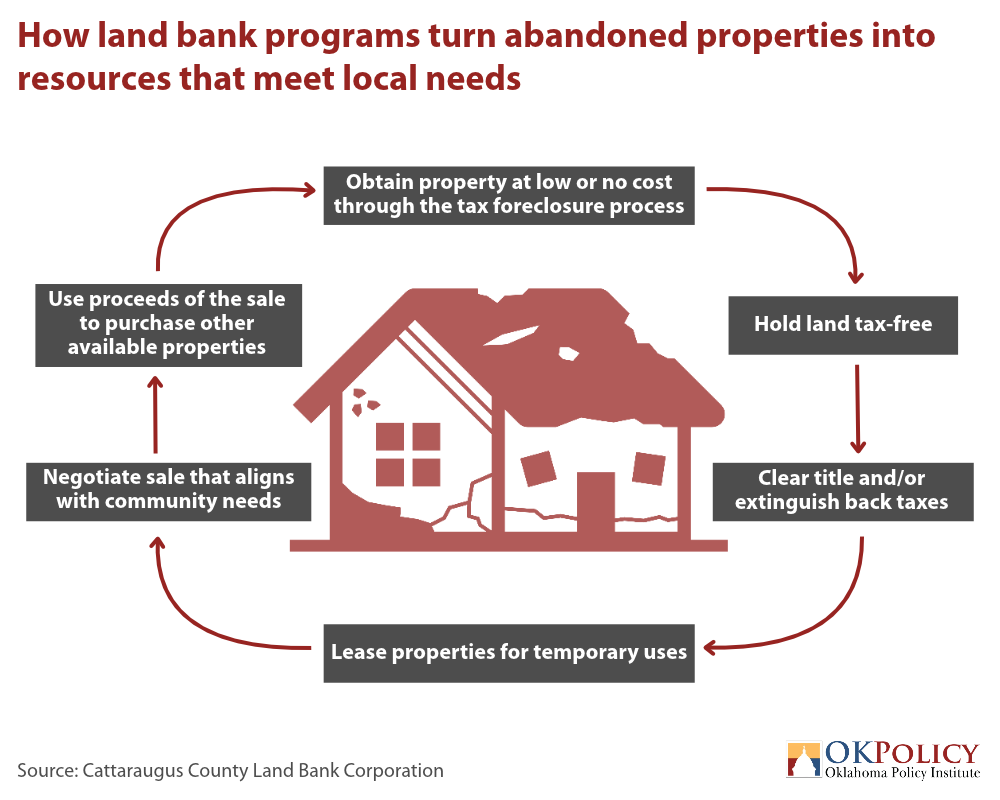
Here is an example of how a land bank may acquire and use a vacant lot: siblings inherit an old house but can’t decide what to do with the land. Meanwhile, it sits abandoned. Code violations and property taxes pile up, so the siblings walk away, and the city condemns the property, and it continues to deteriorate.
Situations like this, where properties are left in limbo and eventually abandoned, are a common reason homes fall into disrepair in Oklahoma communities. But if cities are able to establish local land banks, the property can have a second life. When that happens, the land bank identifies this property as abandoned. The land bank purchases the land at auction from the Oklahoma Tax Commission and holds the property until it can be returned to productive use. The property is tax-exempt during that time while the land bank cleans up the property for development.
For communities prioritizing affordable housing, the land bank would sell the property to a developer with the stipulation that they build housing there that is affordable for their community. After the project is complete, a community member buys the home with a deed restriction ensuring it remains affordable for future homeowners. With the new homeowner paying property taxes, the home now generates revenue for the community rather than sitting abandoned.
Proceeds from the initial sale to the developer are used by the land bank to purchase and develop more properties to address community needs. Land banks can also receive funding from grants, loans, and local governments to get started and support ongoing operations. In some states, land banks can temporarily receive a portion of the property taxes generated by properties they return to productive use, providing another source of funding for future projects.
Land banks have facilitated building affordable housing in many other states. For instance, the Houston land bank constructed and sold 385 affordable homes between 2018 and 2025. In Georgia, the Metro Atlanta Land Bank created 269 housing units from 2024 to 2025. That is a lot of housing on what would have remained vacant, unused land.
Oklahoma does not currently allow land banks. Legislators should change that.
Twenty states have passed laws to allow land banks — Oklahoma is not yet one of them. While Oklahoma has nonprofit-led land banking programs that acquire and hold properties for future development, land banks have additional tools authorized by state law. Unlike nonprofit programs, land banks are locally governed public entities subject to open meeting laws and given their unique powers by the state. This can include the ability to resolve claims to the property for unpaid bills, wipe out back taxes, and clarify titles when there are complicated ownership issues. They are also allowed to acquire property tax-exempt.
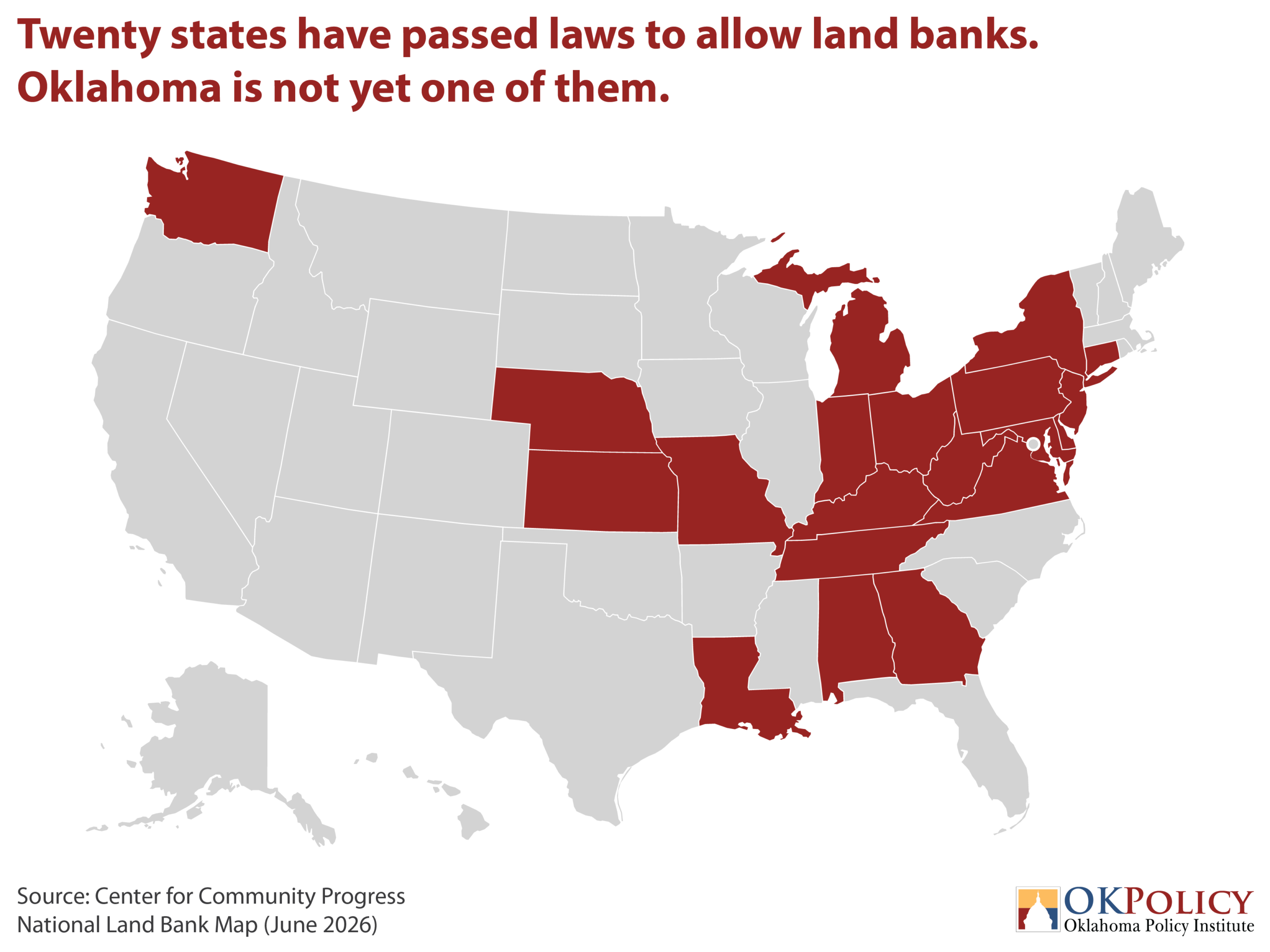
Sen. Julia Kirt, D-Oklahoma City, filed Senate Bill 1478 in the 2026 legislative session that would have allowed cities to establish a land bank, but it failed to advance. However, she hosted an interim study on land banks this year and plans to introduce the measure again in 2027. Legislators should follow the lead of our neighbors in Kansas and Missouri by passing a bill legalizing land banks in the upcoming session.
Land banks benefit all of us
Land banks don’t just benefit people in need of affordable housing; they benefit the entire community. When land banks put vacant, abandoned, or neglected properties back to use, they can attract new investment, help neighborhoods grow stronger, and boost the local economy.
Empty and abandoned lots don’t generate taxes, and vacant and abandoned properties depress the values of surrounding properties. By returning abandoned land to use, land banks increase property tax revenue, as well as other taxes like income and sales tax. In Ohio, a city and county land bank generated $180 million in economic impact over five years and $442,000 in property taxes in 2017 alone from properties that would have otherwise been a drag on their community.
Land banks also contribute to public safety. Vacant and abandoned properties have elevated risks of arson, violent crime, and erode the health of the community. Overgrown vegetation and dumping provide opportunities for illegal activities and harboring of firearms. Oklahoma City residents have reported squatters in neighboring abandoned houses that police are unable to remove because of unclear property ownership. With more than 220,000 vacant housing units in Oklahoma, land banks offer a good option to return these properties to use, which increases the health and safety of the community.
Land banks give local governments the power to meet their community’s needs
In this moment when Oklahoma communities face growing housing shortages and neglected properties, lawmakers should give them practical tools to address both. Land banks are a practical way to help local governments fill housing gaps in their communities and put blighted property back into productive use. Governed by community members and local stakeholders, land banks ensure that those closest to the problem decide on the solution. Twenty other states have demonstrated that land banks build affordable housing and generate revenue for public use. Oklahoma legislators should follow suit and pass legislation opening the door to land banks next session.