



 OKPOLICY.ORG
From OK Policy’s Fiscal Policy Analyst Aanahita Irani Ervin:
At February’s Board of Equalization meeting, one urgent fact stood out: Oklahoma is shifting the cost of essential services onto low- and middle-income families. Year-over-year comparisons show the state is experiencing modest state revenue increases. Most of this increase, however, is coming from collecting more sales and use taxes.
Income taxes are paid proportional to people’s income, while sales taxes hit lower-income families the hardest. Everyday Oklahomans are forced to spend a greater portion of their limited income on basic needs. Even worse, sales taxes are less stable than income taxes, putting funding for schools, health care, and public safety in real jeopardy during an economic downturn — precisely when families are most vulnerable and need help.
Yet some leaders are celebrating the small revenue increase announced Friday, even after last year’s income tax cuts. However, this meager increase doesn’t even keep up with inflation from the past year . Meanwhile, state agency heads have identified $1.8 billion dollars needed to address agency needs in the coming year.
At the same time, the governor is pushing costly proposals, such as a property tax freeze, unlimited private school tax credits, and strict state spending caps. These ideas cost more than the revenue available to the legislature, as reported by the Board of Equalization. Without new revenue, the governor’s policy proposals will almost certainly force deep, immediate cuts to state services. Without sufficient revenue, those consequences could be serious and swift.
Key Takeaways
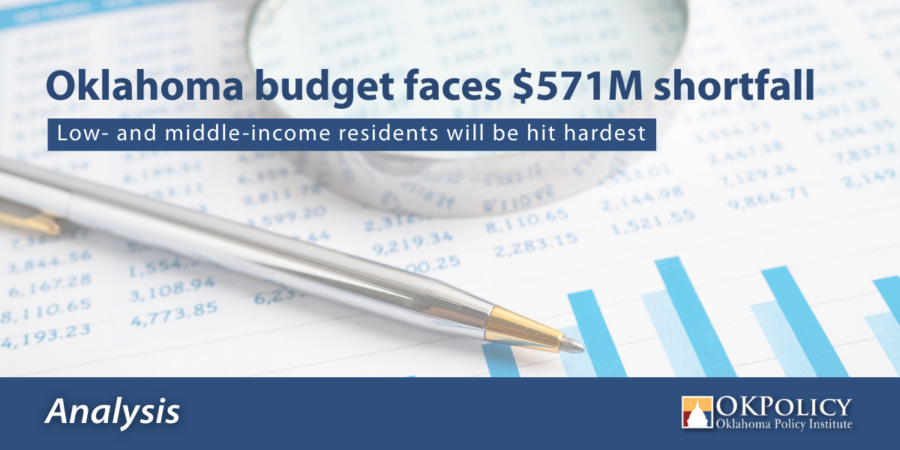
Total authorized budget, FY2027: $12.17 billion
- Down $571 million (4.5%) from the legislative expenditure authority from June 2025.
- This figure includes certified state revenue, plus one-time funds, cash, and federal certified funds.
- The decrease for the coming fiscal year is due to a larger amount of one-time and cash expenses in last year’s FY 2026 budget.
- During the current legislative session, lawmakers will approve a state budget for the upcoming fiscal year (FY 2027), which begins on July 1, 2026.
Total state certified revenue: $8.46 billion, up $186.9 million (2.3%) from the February 2025 certification.
- This amount includes recurring revenue as part of the General Revenue Fund and certain certified state funds.
- This increase is largely due to higher sales and use tax collections, which increased by $262 million (10.1%) compared to February 2025.
Individual income tax decreased by about $20 million (0.6%) year over year.
Savings balances: $3.69 billion in reserves and cash, down $939.6 million (20.3%) from February 2025.
[Reference documents: February 2026 Board of Equalization report and February 2025 Board of Equalization report]
Notes & Background
- The Board of Equalization meets every February to set the maximum amount the Legislature can appropriate for the upcoming fiscal year.
- On Friday, February 13, the Board of Equalization certified $8.91 billion in total state funds available for Fiscal Year 2027, which starts on July 1, 2026.
- The state Constitution allows the Legislature to appropriate 95 percent of the certified recurring revenue estimate for appropriations for the next fiscal year. This means $8.46 billion is available for the legislative appropriations that lawmakers will approve this session for FY 2027.
- It is important to highlight that the year-over-year recurring revenue growth is coming from sales taxes. Increasing the government’s reliance on sales taxes is unwise because:
- They take more from low-income households as a share of their income than from higher income households
- They are a volatile source of revenue, with the potential to change dramatically with economic downturns.
- February’s estimate follows the Governor’s State of the State address and executive budget earlier this month advocating for:
- Across the board property tax freezes which would dramatically cut public school funding and place the fiscal responsibility of funding the gap onto the state
- 3% annual cap on recurring spending growth which would limit state expenditures in any given year and guarantee cuts to agencies and services.
- Eliminating the $250 million cap on the Parental Choice Tax Credit (the state’s private school voucher program), which would funnel unlimited amounts of tax dollars from public schools to the parents of private school students.
- The bottom line is that Oklahoma’s budget is stable, for now. However, shifting the state’s reliance to sales taxes while advocating for service cuts and unlimited tax credits for wealthy Oklahoma families is not sustainable or fair.
- As legislative budget chairs are warning of a tight budget year even with these increased revenue estimates. This is not the time for large giveaways to the wealthy or austerity measures in the face of federal cuts.
- This is the moment to secure funding for the Oklahoma Health Care Authority (which administers SoonerCare, the state’s Medicaid program) and the Oklahoma Department of Human Services (which administers the SNAP food assistance program) that are facing enormous budget shortfalls in light of H.R.1.
- Legislators can still provide much needed property tax relief in a responsible way by supporting the modernization of targeted tax credits and exemptions already on the books in Oklahoma, like increasing the ad valorem homestead exemption.
- As the legislative session proceeds and budget negotiations occur, OK Policy encourages the Governor and leaders from the Senate and House to make the budget process more transparent. Some improvements include: starting the public budget meetings earlier in the session, making sure there are more voices in the room during those meetings, being consistently transparent throughout the process, and releasing the final budget within 48 hours or more for lawmakers and the public to review.