OKPOLICY.ORG

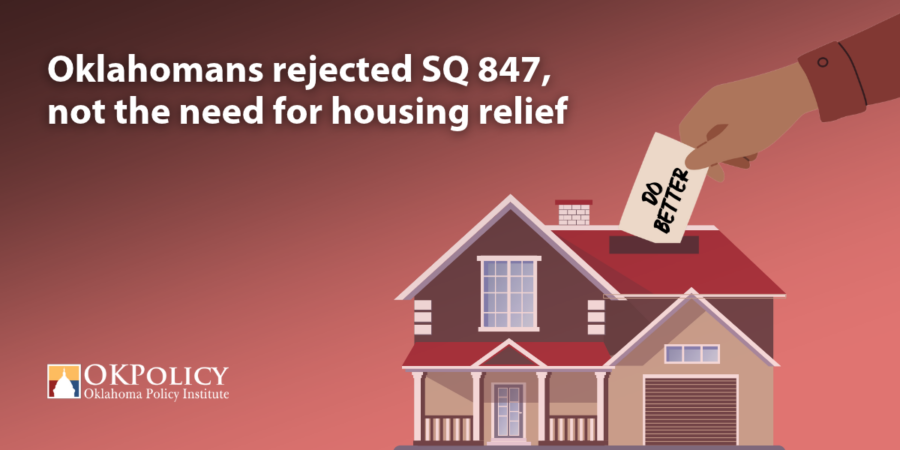
Oklahoma voters rejected State Question 847 on Nov. 3, but lawmakers shouldn’t mistake that decision for a lack of concern about rising housing costs.
SQ 847 promised property tax relief, but it wouldn’t have lowered anyone’s current tax bill. Instead, it would have slowed future increases in taxable property values, potentially shifting costs to other taxpayers and putting pressure on funding for schools and other local services.
Following the election, a senior lawmaker suggested voters had rejected the idea of changing property taxes altogether.
“It looks like the voters of Oklahoma tonight said no,” the lawmaker said. “They don’t want to see changes to property taxes, and so moving forward, we’ll take that into consideration.”
That interpretation misses the point.
Throughout the campaign, we heard from Oklahomans across the political spectrum who were frustrated and angry about rising housing costs. Some supported SQ 847 because they wanted relief. Others opposed it because they recognized its shortcomings and wanted better solutions.
Rejecting one proposal doesn’t mean rejecting the problem it was supposed to solve.
And housing affordability involves much more than property taxes. Homeowners face rising insurance premiums, maintenance costs, and utility bills. Renters face increasing monthly payments. Seniors on fixed incomes may struggle to remain in homes they’ve owned for decades. Meanwhile, the supply of affordable housing remains insufficient.
Actions the Oklahoma Legislature can take in 2027 to address rising housing costs
When the Legislature convenes in 2027, lawmakers should focus on three practical solutions:
Protect Oklahomans from losing their homes
Oklahoma should strengthen protections for seniors, people with disabilities, and financially vulnerable homeowners who risk losing their primary residences over unpaid property taxes. Lawmakers can allow for payment plans to pay delinquent taxes, prevent tax sales of homes for seniors and people with disabilities over delinquent taxes, and strengthen other safeguards around tax foreclosure auctions. These policy changes could help people experiencing financial hardship remain in their homes without eliminating their responsibility to pay property taxes.
Keeping Oklahomans housed should be a priority, especially when temporary financial hardship threatens years of investment in a family home.
Address rising homeowners insurance costs
While property taxes get much of the political attention, homeowners insurance is a major driver of rising housing costs in Oklahoma. A report last year showed Oklahoma now has the highest homeowners’ insurance costs in the nation, averaging about $6,133 per year, according to a recent LendingTree analysis.
That same report showed Oklahoma home insurance rates increased by more than 50 percent between 2019 and 2024, ranking the state 15th-highest in the nation for rate increases. Part of the problem is that property insurance rates are higher for homeowners with low credit scores, even if they own a home identical to their neighbor’s.
Even more troubling, Oklahoma Insurance Commissioner Glen Mulready has said that roughly 1 in 8 homeowners in our state now goes without home insurance because it has become too expensive.
Lawmakers should strengthen oversight of insurance rate increases, require greater transparency about how premiums are determined, and improve consumer protections when insurers reduce coverage or decline to renew policies.
A fair insurance market should balance insurers’ ability to pay claims with homeowners’ need for affordable, dependable coverage.
Modernize property tax exemptions and credits
Oklahoma’s basic homestead exemption reduces the assessed value of an eligible primary residence by $1,000 for property tax purposes, which saves homeowners around $100 to $120 annually. Increasing that exemption to $3,000 would directly lower current property tax bills by $300 for qualifying homeowners, increasing annual savings by $200.
Oklahoma’s property tax credit, which refunds up to $200 to a homeowner if their property taxes are more than 1 percent of their income, also has an outdated eligibility requirement that is too low for anyone to qualify. Lawmakers should update this provision of statute to help more low-income seniors and people with disabilities.
Unlike SQ 847, these solutions would provide immediate relief for Oklahoma homeowners rather than simply slowing future increases. It would also focus benefits on owner-occupied homes instead of extending them to commercial properties and second homes.
Property taxes in Oklahoma are inherently local — they’re voted on by local voters for exclusive use in their local communities. If the legislature moves to reduce property tax revenue, it should pair those proposals with solutions that give communities a voice in how they can protect local schools, libraries, emergency services, and other essential community investments currently funded through property taxes.
Other options deserve consideration
While these are the three options that are readily available to lawmakers, there are other data-driven strategies to consider:
- Circuit breakers: used to prevent a property tax “overload” by crediting back property taxes that exceed a certain share of income.
- Renter tax credits: provide financial relief to people who pay rent for their primary residence and indirectly contribute to property taxes.
- Vacancy taxes: a tax applied to properties that are unoccupied for a certain period of time in a year. This targets households with vacation homes or secondary homes or property. Helps combat housing shortages and discourages property speculation by penalizing property owners for leaving residential properties vacant, encouraging them to rent or sell these homes.
- Standardize and automate assessment procedures: Increase the frequency of property assessments and reduce bias in assessment procedures.
Oklahomans deserve meaningful relief
The defeat of SQ 847 wasn’t a mandate to maintain the status quo. It was an opportunity to pursue better solutions that address the real financial pressures Oklahoma families face.
Lawmakers should recognize that rising housing costs remain a serious concern for Oklahomans, regardless of how they voted. Rather than treating the election results as the end of the conversation, the Legislature should use the coming session to take meaningful action. That means looking beyond property taxes alone, considering the full cost of housing, and prioritizing solutions that provide direct relief to those who need it most.
Oklahomans deserve lawmakers who will listen to their concerns, examine the evidence, and advance policies that make housing more affordable without jeopardizing the schools, public safety, and other local services their communities depend on.
Voters said no to SQ 847. They didn’t say no to affordable housing. Lawmakers should hear that message loud and clear.