OKPOLICY.ORG

• SQ 847 Fact Sheet | SQ 847 Explainer Video
• What’s on the ballot for the November 3, 2026 elections in Oklahoma?
• Vote NO on SQ 845 and SQ 847 | Oklahomans need real solutions. These proposals aren’t them.
State Question 847 — being decided by Oklahoma voters on Nov. 3, 2026 — is promoted as property tax relief, yet it fails to reduce tax bills and would make it harder for local communities to adequately fund schools and essential services. It may even raise taxes.
From classrooms and CareerTech programs to libraries and local governments, Oklahomans across the state share their concerns about how State Question 847 could affect the communities they call home.
Jump to individual stories:
• Oklahoma’s SQ 847: There’s More at Stake Than Property Taxes
• What SQ 847’s slower property tax growth really means
• SQ 847 — Why a NO vote helps rural Oklahoma
• SQ 847 gambles with our schools and emergency services
• Philanthropy cannot replace public investment in our libraries
• CareerTech gave me a chance. Will SQ 847 take it away?
• Local voices matter—SQ 847 puts them at risk
• SQ 847 could undermine local school investments
• Oklahoma communities have more to lose under SQ 847
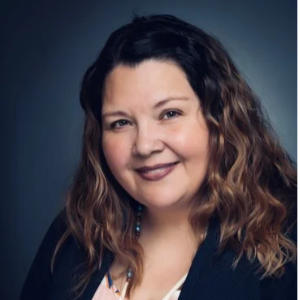
Oklahoma’s SQ 847: There’s more at stake than property taxes
“For me, the public library is not an abstract service or simply a place to check out books. It is part of the infrastructure that gives people the tools to create, learn, build opportunities and participate in our economy. That is one reason I am concerned about State Question 847 and what it could mean for Oklahoma’s public libraries and other local services.”
Read the full commentary from Jennifer Reeder, a businesswoman and artist from Moore
When Oklahomans think about public libraries, books are often the first thing that come to mind. But anyone who regularly uses a local library knows they have become so much more. I see libraries as places where children learn, families gather, job seekers find resources, entrepreneurs build businesses and people without reliable technology at home can access computers and the internet. I also see them as places that have personally helped me grow my own small business.
As a Native American artist and small-business owner, I have used resources available through my public library, including equipment in its Makers Lab, to create items that expand and enhance my product lines. Access to this kind of equipment opens doors for entrepreneurs, artists and makers who might otherwise have to invest in expensive tools and technology themselves. For me, the public library is not an abstract service or simply a place to check out books. It is part of the infrastructure that gives people the tools to create, learn, build opportunities and participate in our economy. That is one reason I am concerned about State Question 847 and what it could mean for Oklahoma’s public libraries and other local services.
SQ 847, which will appear on Oklahoma’s Nov. 3 ballot, would change the constitutional limits on how quickly the assessed value of property can increase for property-tax purposes. Beginning in 2027, the cap for homestead and agricultural property would decrease from 3% to 1.75%, while the cap for other real property would decrease from 5% to 4%. For homeowners facing increasing costs, the appeal of slowing down increases in taxable property values is understandable. But there is another side of the equation we should not overlook: Property taxes help pay for local services, including many of Oklahoma’s public library systems.
The Oklahoma Department of Libraries says property taxes provide primary funding for Oklahoma’s library systems, which are supported through voter-approved property-tax millage. SQ 847 would not eliminate that millage or automatically cut a library’s existing budget. Instead, by further limiting growth in assessed property values, it could constrain how quickly revenue generated by that tax base grows. That distinction matters.
A library does not have to receive an outright budget cut to find itself financially squeezed. If revenue grows more slowly than the costs of salaries, utilities, insurance, technology, books and building maintenance, a library will have less purchasing power. Over time, those pressures can affect decisions about staffing, hours, collections, technology, programming and investments in facilities and equipment. And Oklahoma is asking libraries to do more, not less.
Today, libraries provide computers and high-speed internet, workforce assistance, digital resources, children’s programming, and technology education. The Oklahoma Broadband Office recently announced a $14.5 million statewide initiative designed to use public libraries as access points for health care, workforce services and digital-skills training. That tells us something important about the role libraries play in our communities.
My own experience illustrates it on a smaller scale. A piece of equipment in a library Makers Lab can become a tool for entrepreneurship. It can allow an artist to experiment with a design, create a new product and generate income. A child can discover technology that sparks a career. A job seeker can use internet access to apply for a job. A family can participate in educational programming without worrying about whether it can afford it. These are investments in people.
There is a legitimate public conversation to be had about property taxes and how Oklahoma can protect homeowners from increasing costs. But that conversation should also account for the local services that taxes support and what happens when their revenue fails to keep pace with expenses. Before we change Oklahoma’s Constitution, we should understand the entire equation, not simply what might appear on one side of a property-tax bill.
I know what my library has given me: resources, technology and opportunities that have directly supported my creativity and my small business. Whatever Oklahomans ultimately decide about SQ 847, I hope we recognize the value of the community resources affected by our property-tax system. Public libraries are not simply buildings filled with books. I know because I use mine. And I believe their value deserves a prominent place in Oklahoma’s discussion about State Question 847.
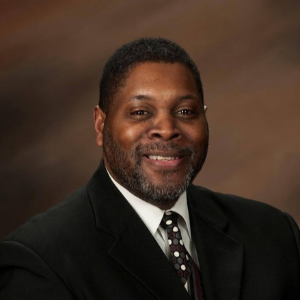
What SQ 847’s slower property tax growth really means
“SQ 847 directly results in reduced amounts of operational revenue available to counties, school districts, libraries, and career techs. Some of the impacts on public schools will be offset by the State Equalization funds because per pupil expenditures are supposed to be equal throughout the state regardless of the amount of local property taxes generated. However, the overall impact is less tax revenue available for local services’ daily operation costs.”
Read the full commentary from Tony Francisco of Oklahoma City. He is former public finance official with more than 30 years of experience in municipal finance and budgeting in Oklahoma, Washington, and Missouri.
Property taxes are the only revenue source that does not go to the state legislature, instead it goes directly to fund local government and local services. There are two ways property taxes can be used. Counties, school districts, library districts, career technical districts and health departments use property tax revenue to pay for their ongoing day-to-day costs like employee salaries (e.g., teachers, librarians or deputy sheriffs). The amount of these taxes is usually capped by the State Constitution and vary depending on the local entity, for example school districts are limited to 10 mills (note: a “mil” or “mill” is one-tenth of one percent, or $.001). Almost every school, library, vo-tech district or county government charges the full amount that the State Constitution allows them to charge property owners for their operational costs.
The second way property taxes are used is through bonds. Oklahoma is the only state in the United States where cities do not get property tax revenue for everyday operational costs. Cities only receive property tax revenue to repay the debt on voter-approved general obligation (GO) bonds. Public schools and cities are the only two local entities that can use property taxes to fund capital projects via general obligation bonds.
What does SQ 847 change?
State question 847 will impact both everyday operational costs and bonding capacities of local entities. The value of every property in a county is determined every year by the County Assessor. But the County Assessor does not appraise every property every year. Instead, assessors assess some random areas/neighborhoods within the county, and then apply a growth factor to the other properties. This annual growth factor is capped by the State Constitution at 3% for homestead-exempt and agricultural land and 5% for all other property. SQ 847 lowers the allowable growth factor to 1.75 percent and 4 percent respectively. It also creates a tiered assessment cap program for seniors making above the income qualification for the senior freeze. The reduction in the growth factor reduces future revenue growth.
SQ 847 directly results in reduced amounts of operational revenue available to counties, school districts, libraries, and career techs. Some of the impacts on public schools will be offset by the State Equalization funds because per pupil expenditures are supposed to be equal throughout the state regardless of the amount of local property taxes generated. However, the overall impact is less tax revenue available for local services’ daily operation costs.
As it relates to voter-approved (GO) bonds for one-time capital projects (school buildings, city streets or bridges, etc.), the results may be higher property taxes. When voters approve a GO Bond for a project, they also authorize a property tax to be levied in an adequate amount to pay the debt on the bonds. There is no Constitutional cap on this tax rate; it just depends on the amount of debt costs that have to be repaid in a given timeframe. Since SQ 847 will result in lower overall assessed property value, a municipality will increase the tax rate to generate enough revenue to pay the bond debt that the voters approved.
Tradeoffs voters must consider
The proposed Constitutional changes in SQ 847 requires voters to consider lower annual growth in property values (and slower growth in annual property taxes) against the potential for reduced services provided by schools, counties, libraries and vo-tech districts. The potential risk for higher property taxes to meet bond obligations is also present.
As always, the implementation of this proposal and the future response of various governments if it passes will be critical. But it is basically a question of slower growing property taxes versus reduced service delivery.
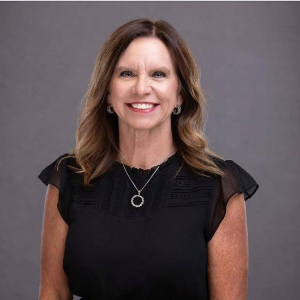
State Question 847 — Why a NO vote helps rural Oklahoma
“Further capping the assessment rate and slowing the growth of property tax revenue might sound appealing at first. But in a time when our schools, CareerTechs, businesses, and communities are facing growing needs, taking away the flexibility to fund those services could come at a real cost — especially in rural Oklahoma.”
Read the full commentary from Kaycie Craig from Kingfisher
There’s one word that can make just about everyone cringe: taxes. We’ve all heard the old saying that the only things certain in life are death and taxes. But there’s another certainty we should remember: the rural services we depend on don’t happen by accident.
Our schools, CareerTechs, roads, emergency services, and other local resources are the backbone of our community here in Kingfisher. None of us particularly enjoys paying taxes, but we all expect these services to be there when we need them. When our communities have the resources to provide them, we give our families and businesses the opportunity to thrive and grow.
The old adage that “nothing is free” certainly comes to mind when I think about property taxes. Those local tax dollars help fund the very services we rely on every day.
I see the value of those investments firsthand. As an employee of a CareerTech and a mom of a CareerTech student, I have witnessed the difference workforce training can make. Nearly half of Kingfisher High School students are enrolled at our CareerTech, where they gain hands-on experience and learn skills that prepare them for the workforce.
That training matters — especially now. As costs continue to rise, providing affordable, accessible workforce training has become even more important. Our local businesses need skilled employees, and they want to hire local graduates who will stay, work, raise families, and invest in our communities rather than feeling they have to leave for the metropolitan areas or out of state.
Further capping the assessment rate and slowing the growth of property tax revenue might sound appealing at first. But in a time when our schools, CareerTechs, businesses, and communities are facing growing needs, taking away the flexibility to fund those services could come at a real cost — especially in rural Oklahoma.
On November 3, we have an opportunity to stand up for the schools, CareerTech programs, emergency services, roads, and other local resources that make our communities strong. Can you imagine living in an area where these resources aren’t available for ourselves or our neighbors? I plan to vote NO on State Question 847 so we continue to keep local control of our tax dollars where it belongs: in our communities, supporting the people who live and work here.
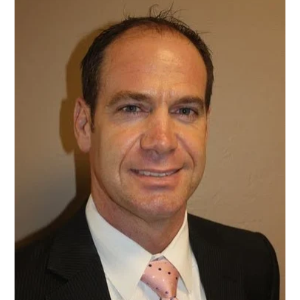
SQ 847 gambles with our schools and emergency services
“After studying the ballot, weighing the risks versus reward, and considering my experience as a parent, land owner, first responder, and business owner, it is clear to me that I am a strong no vote on State Question 847. I invite you to support local control, not gamble with the futures of our schools and emergency services, and join me in voting no.”
Read the full commentary from Daniel “Danny” Manuel, a retired firefighter, former 9-1-1 director, rancher and business owner
Despite living my entire 52 years in Pontotoc County, my career in emergency services has taken me all over our state and country. For over 21 years, I was a firefighter for the City of Ada and for over 5 years I was the 9-1-1 Director for Pontotoc County.
I have always been someone who is eager to learn and even teach others. That’s why I was involved in organizations that provided opportunities to learn from others in my career fields and various stakeholders. It became clear that we all had many things in common, but none of us did things exactly the same. Although we can definitely learn from someone across the state or county, the value of local control is still paramount. It allows us to decide what works best for us, because each community is unique. Now as a rancher and self-employed equipment owner/operator, I am impacted differently by property taxes, but I still understand the necessity of local control.
My concerns with State Question 847 are simple. Despite looking promising on the surface as something that could benefit many of us concerning property taxes, it has the potential to do more harm than good. It could compromise the ability of local governments, schools, and CareerTechs to pay bonds and still have enough funds to maintain appropriate levels of service. It could raise property taxes for some seniors and new home owners while giving wealthy corporations a break.
When I obtained my graduate degree in education administration, I took a school finance class that helped me to understand questions like this and the implications of them. As a parent of two children in college, I remember the financial struggles of our local public schools. I understand that the only way to make major improvements such as modern facilities and safe rooms is for local communities to choose to invest in their local schools. Although I knew my children would not benefit from the improvements, I was proud to support a recent bond issue to provide much needed funding for the school they graduated from.
After studying the ballot, weighing the risks versus reward, and considering my experience as a parent, land owner, first responder, and business owner, it is clear to me that I am a strong no vote on State Question 847. I invite you to support local control, not gamble with the futures of our schools and emergency services, and join me in voting no.

Philanthropy cannot replace public investment in our libraries
“Oklahomans have invested in their libraries for generations. We should protect that investment while finding better ways to address property tax burdens. That’s why I oppose State Question 847.”
Read the full commentary from Jana Moring, Chair of the Pioneer Library System Foundation and executive director of Communities Foundation of Oklahoma
In 2008, I became Pioneer Library System’s first fundraiser and helped establish its foundation. Our goal was simple: Build permanent charitable resources to support the extraordinary work happening in our public libraries. I was proud to pass that work along to my successor as I continued my career in philanthropy at the OU Foundation and now at the Communities Foundation of Oklahoma.
Nearly 20 years later, I have the privilege of chairing the Pioneer Library System foundation’s board. I’ve seen what private generosity can accomplish, from expanding educational opportunities to supporting innovative programs that change lives.
But I’ve also learned an important lesson: Philanthropy works best when it builds upon a strong foundation of public investment.
Pioneer Library System serves communities in Cleveland, Pottawatamie, and McClain counties. Its libraries provide far more than books. They offer early literacy programs, technology, workforce resources and welcoming places where people of all ages can learn and connect.
These services depend on reliable public funding, particularly local property taxes.
State Question 847 would further limit annual increases in assessed property values, restricting the growth of revenue that libraries and other essential local services depend upon. Meanwhile, the costs of providing those services continue to rise.
I understand the desire for property tax relief. But limiting the resources available to our libraries isn’t the same as providing meaningful relief to the families who need it most.
Our foundation was created to help libraries do more, not to replace the public dollars that keep their doors open.
Oklahomans have invested in their libraries for generations. We should protect that investment while finding better ways to address property tax burdens.
That’s why I oppose State Question 847.

CareerTech gave me a chance. Will SQ 847 take it away?
“SQ 847 would basically make it financially harder for our public schools and CareerTechs to keep delivering the programs I’m currently enrolled in. That worries me because the cost of running these programs keeps rising. Tools, equipment, supplies, and technology all cost money. And if our workforce needs to grow to meet demands, then so do our schools. If schools can’t keep up, students like me might have fewer opportunities.”
Read the full commentary from Charlie Wright, a senior at Noble High School who is enrolled at Mid-America Technology Center
I’m a senior at Noble High School and also enrolled at Mid-America Technology Center studying to become an HVAC technician. I’m learning how to install and repair the heating and air conditioning systems that people depend on every day.
This job takes real skills. Thanks to my high school and CareerTech, I’m getting the training I need to turn those skills into a career. I’m honestly excited for what’s next. I want a solid job, a decent paycheck, and to actually build my future here in Oklahoma.
But chances like this don’t just pop up. We need good teachers, up-to-date equipment, and schools that actually help us get ready for the real world. That’s why I’m worried about State Question 847.
I’ll be the first to admit that I’m not an expert on property taxes. But I do know they help pay for our public schools and CareerTech. And from the conversations I’ve had with my family, I know that SQ 847 would basically make it financially harder for our public schools and CareerTechs to keep delivering the programs I’m currently enrolled in.
That worries me because the cost of running these programs keeps rising. Tools, equipment, supplies, and technology all cost money. And if our workforce needs to grow to meet demands, then so do our schools. If schools can’t keep up, students like me might have fewer opportunities.
I know some people are struggling to pay their bills. And I get why they’re concerned about rising housing costs, including property taxes. But from what I’ve heard from people who have looked into SQ 847, it won’t actually lower anyone’s current property tax bill. Instead, it seems like it would put funding for public schools and CareerTech programs at risk. And those are the very places helping students like me learn skills, find good jobs, and build better lives.
Noble High School and Mid-America are helping me start my career. I want other students to have the same chance, whether they want to work in HVAC, welding, health care, or another trade.
Oklahoma needs more people with real skills, and that starts with giving us a shot to learn. I’m working hard to build a better future. I just hope Oklahoma keeps backing students like me.
.

Local voices matter—SQ 847 puts them at risk
“Schools use property taxes for classrooms, buses, and other voter-approved needs. Communities use bonds for public safety, county government, and libraries. In McCurtain County, where I live, more than 60 percent of property taxes go to local public schools; libraries get almost 5 percent. It also helps fund the sheriff’s office and emergency medical services in the county. SQ 847 puts that local funding at risk.”
Read the full commentary from Kent Hendon, a retired Oklahoma educator with 35 years of experience, including 20 years as a superintendent in McCurtain County. He currently serves on the Southeast Oklahoma Library System Board of Trustees for the Broken Bow Public Library.
When Oklahomans think about public libraries, books are often the first thing that come to mind. But anyone who regularly uses a local library knows they have become so much more. I see libraries as places where children learn, families gather, job seekers find resources, entrepreneurs build businesses and people without reliable technology at home can access computers and the internet. I also see them as places that have personally helped me grow my own small business.
As a Native American artist and small-business owner, I have used resources available through my public library, including equipment in its Makers Lab, to create items that expand and enhance my product lines. Access to this kind of equipment opens doors for entrepreneurs, artists and makers who might otherwise have to invest in expensive tools and technology themselves. For me, the public library is not an abstract service or simply a place to check out books. It is part of the infrastructure that gives people the tools to create, learn, build opportunities and participate in our economy. That is one reason I am concerned about State Question 847 and what it could mean for Oklahoma’s public libraries and other local services.
SQ 847, which will appear on Oklahoma’s Nov. 3 ballot, would change the constitutional limits on how quickly the assessed value of property can increase for property-tax purposes. Beginning in 2027, the cap for homestead and agricultural property would decrease from 3% to 1.75%, while the cap for other real property would decrease from 5% to 4%. For homeowners facing increasing costs, the appeal of slowing down increases in taxable property values is understandable. But there is another side of the equation we should not overlook: Property taxes help pay for local services, including many of Oklahoma’s public library systems.
The Oklahoma Department of Libraries says property taxes provide primary funding for Oklahoma’s library systems, which are supported through voter-approved property-tax millage. SQ 847 would not eliminate that millage or automatically cut a library’s existing budget. Instead, by further limiting growth in assessed property values, it could constrain how quickly revenue generated by that tax base grows. That distinction matters.
A library does not have to receive an outright budget cut to find itself financially squeezed. If revenue grows more slowly than the costs of salaries, utilities, insurance, technology, books and building maintenance, a library will have less purchasing power. Over time, those pressures can affect decisions about staffing, hours, collections, technology, programming and investments in facilities and equipment. And Oklahoma is asking libraries to do more, not less.
Today, libraries provide computers and high-speed internet, workforce assistance, digital resources, children’s programming, and technology education. The Oklahoma Broadband Office recently announced a $14.5 million statewide initiative designed to use public libraries as access points for health care, workforce services and digital-skills training. That tells us something important about the role libraries play in our communities.
My own experience illustrates it on a smaller scale. A piece of equipment in a library Makers Lab can become a tool for entrepreneurship. It can allow an artist to experiment with a design, create a new product and generate income. A child can discover technology that sparks a career. A job seeker can use internet access to apply for a job. A family can participate in educational programming without worrying about whether it can afford it. These are investments in people.
There is a legitimate public conversation to be had about property taxes and how Oklahoma can protect homeowners from increasing costs. But that conversation should also account for the local services that taxes support and what happens when their revenue fails to keep pace with expenses. Before we change Oklahoma’s Constitution, we should understand the entire equation, not simply what might appear on one side of a property-tax bill.
I know what my library has given me: resources, technology and opportunities that have directly supported my creativity and my small business. Whatever Oklahomans ultimately decide about SQ 847, I hope we recognize the value of the community resources affected by our property-tax system. Public libraries are not simply buildings filled with books. I know because I use mine. And I believe their value deserves a prominent place in Oklahoma’s discussion about State Question 847.
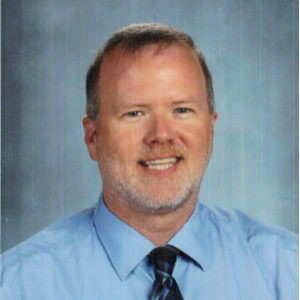
SQ 847 could undermine local school investments
“To be clear, SQ 847 isn’t a tax cut. No one’s property tax bill will be cut if SQ 847 passes. Your taxes will continue to grow for the most part, just at a slower rate. What will happen is that revenue growth for local services — including public schools, libraries, Career Techs, sheriff departments, EMS and many other services — will decrease. Most of the major improvements, including buildings, for these services come from property tax revenue. Inflation will likely increase quicker than property values can keep up with. This means the cost of providing the services will increase, while the revenue to fund those services erodes.”
Read the full commentary from Zach Murray, a teacher from Ponca City.
As a Ponca City High School science teacher for the last 20 years, I have seen the benefit of many bond issues. From athletics facilities, to the concert hall, from STEM facilities to security enhancements, Ponca City Public Schools has flourished due to bond issues. However, State Question 847 poses a threat to PCPS’s ability to use bond issues for necessary enhancements and improvements to our facilities. SQ 847, appearing on the November 3rd ballot, would decrease the assessment cap, which sets a limit on how much property values can increase year over year. This sounds great, but it will have some severe unintended consequences.
To be clear, SQ 847 isn’t a tax cut. No one’s property tax bill will be cut if SQ 847 passes. Your taxes will continue to grow for the most part, just at a slower rate. What will happen is that revenue growth for local services — including public schools, libraries, Career Techs, sheriff departments, EMS and many other services — will decrease. Most of the major improvements, including buildings, for these services come from property tax revenue. Inflation will likely increase quicker than property values can keep up with. This means the cost of providing the services will increase, while the revenue to fund those services erodes. So, yes, your future property bill will increase at a slower rate, but so will the revenue needed to sustain local investments.
This will impact bond issues. Future school bond issues may not be able to include as many items. This could lead to necessary building improvements being delayed. By the time these improvements get addressed, the needs may be greater and cost more. As for current bond issues already passed by voters, local governments may need to increase the overall millage rates to make bond payments, increasing property tax bills for all homeowners.
Ponca City Public Schools administration has prided itself on keeping the school bond millage rates constant for the last several bond issues. Thanks to that we have a beautiful concert hall for our performance arts students, athletics facilities that have also hosted college sports, safe and secure schools, and STEM facilities that allow students to design and build gliders and other aircraft. Property taxes allow us to invest in our own children and their futures. Don’t let state lawmakers take away our ability to continue improving our schools and our community. I urge you to vote no on SQ 847.

Oklahoma communities have more to lose under SQ 847
“Rural communities and small towns would suffer the greatest effects from SQ 847, as the tax base in these communities is limited and not easily replaceable… At a cursory glance SQ 847 might appear to offer a decrease in property taxes for Oklahoma homeowners; it doesn’t do that. In fact, its passage would most benefit wealthy corporations while it limits Oklahoma communities’ ability to govern themselves, grow at their own rate, and fund at their own discretion their public schools, libraries, and other public services.”
Read the full commentary from Rilla Askew from Norman
When I was a child growing up in Bartlesville, two places offered me free entry into the wonderful world of books: my school library at Oak Park Elementary and the Bartlesville Public Library downtown. Here, I learned history and mystery, the magic of story and the importance of understanding the wider world. Later, when I became an author writing about Oklahoma’s complicated past, public libraries became my primary sources: the Ralph Ellison Library in Oklahoma City, the Tulsa City-County and Rudisill libraries in Tulsa, public libraries in McAlester and Tahlequah and various libraries throughout the Pioneer Library System.
In 2007, I traveled across the state for the Oklahoma Reads Oklahoma program, visiting libraries from Miami to Altus, Boise City to Idabel. Everywhere, I saw the importance of our public libraries to Oklahoma’s communities, large and small. Whether serving students with after-school programs or adults who need the library’s computers to apply for jobs and fill out forms or community members who gather there for monthly meetings or seniors who stop by to choose a new book to read, public libraries serve as the most important non-partisan civic organizations in our communities statewide.
Our libraries are supported locally, in large part, by our property taxes—just as property taxes are a primary source of local revenue that helps fund our public schools. This is why I’m opposed to State Question 847, which will be on the November 3 ballot. Having read the proposal closely and gathered input from nonpartisan sources, it’s clear to me who would benefit from its passage—large corporations, including those who’ve come in from outside and bought up vast tracts of Oklahoma land.
And who would suffer? Our schools and libraries and public services. Rural communities and small towns would suffer the greatest effects from SQ 847, as the tax base in these communities is limited and not easily replaceable. It would inevitably lead to more school consolidations. I still have close ties to Red Oak and Fanshawe in southeastern Oklahoma, where my family lived for five generations. I know how important the public schools are to those communities and how devastating school consolidation would be for them. This is true for small towns and communities across the state.
Like many Oklahomans, I’m a homeowner with a mortgage, and I’ve seen my escrow payments increase over the past few years: not because of higher property taxes but because of the scandalously high homeowner insurance rates in this state. This is an issue I wish our state legislators would address instead of forcing through this deceptive state question that does not reduce costs.
At a cursory glance SQ 847 might appear to offer a decrease in property taxes for Oklahoma homeowners; it doesn’t do that. In fact, its passage would most benefit wealthy corporations while it limits Oklahoma communities’ ability to govern themselves, grow at their own rate, and fund at their own discretion their public schools, libraries, and other public services.
I urge my fellow Oklahomans to vote No on State Question 847.